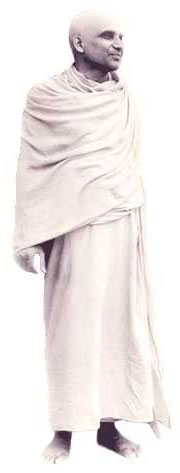
by Swami Krishnananda

ōm namaste astu bhagavan
viśveśvarāya mahādevāya
tryaṁbakāya tripurāntakāya
trikalāgni-kālāya kālāgnirudrāya
nīlakaṇṭhāya mrutyuṁjayāya
sarveśvarāya śankaraya
sadāśivāya śrīmanmahādevāya namaḥ.
Prostration be to Thee, O Lord, Ruler of the universe, Great God Three-Eyed One, Destroyer of the Tripuras, Death to the destructive Fire of the three worlds at the end of Time, Terror to even to the terrible Fire of Time, Blue-necked One, Overcomer of mortality, Overlord over everyone, Bestower of Blessedness, Ever-Auspicious, the Blessed Great God—to Thee, prostration.

namo hiraṇyabāhave senānye diśāṁ ca pataye namo
namo vṛkṣebhyo harikeśebhyaḥ paśūnāṁ pataye namo
namaḥ saspiñjarāya tviṣīmate pathīnāṁ pataye namaḥ.
Prostration to the Golden-armed One, the Supreme Commander of all forces, the Lord of all quarters. Prostration to the Vital Essence and Source of the green-leafed trees, the Master of all created beings. Prostration to the Self-effulgent One, the Lord of the different routes (which souls take on departure from this world).
Note:—In the first section, the Rudra-Adhyaya delineated the Power of Rudra-Siva in His form as the Wielder of the bow and arrows. In the subsequent sections, His glories as revealed in all creation, as manifest in every quarter and cranny, are described. These hymns abound in a varied adoration of the Supreme Being in all things, and every word of ‘prostration’ is repeated twice, as prostration on both sides, and prostration in the beginning and in the end (which is avoided in the translation).

namo babhluśāya vivyādhine'nnānāṁ pataye namo
namo harikeśāyopavītine puṣṭānāṁ pataye namo
namo bhavasya hetyai jagatāṁ pataye namo.
Prostration to the Rider of the bull, the Chastiser of the opposing force, the Lord of food or Ruler over matter. Prostration to the One with blue hair on the head (not turned gray), the Wearer of the sacred thread (indicating auspiciousness), the Master of those who are full with the qualities of perfection. Prostration to the Severer of samsara, the Sovereign over all creation.
namo rudrāyātatāvine kṣetrāṇāṁ pataye namo
namaḥ sūtāyāhantyāya vanānāṁ pataye namo
namaḥ rohitāya sthapataye vṛkṣāṇāṁ pataye namaḥ.
Prostration to Rudra, who protects with His outstretched bow, the Ruler of all fields (temples, bodies and all creation). Prostration to the Charioteer (Director of all things), the Invincible One, the Lord of all forests (vegetation life). Prostration to the crimson-hued One, who, existing (even) in trees, is the Supreme Protector of all.

namo mantriṇe vāṇijāya kakṣāṇāṁ pataye namo
namo bhuvaṁtaye vārivaskṛtāyauṣadhīnāṁ pataye namo
nama uccairghoṣāyākrandayate pattīnāṁ pataye namo
namaḥ kṛtsnavītāya dhāvate satvanāṁ pataye namaḥ.
Prostration to the One who manifests Himself as the minister in a royal court, as the merchant in business, and as the ruler over all the plant kingdom; prostration to the Creator of the world, the Master of all wealth, the Lord over medicines; prostration to Him who thunders in battle and makes the enemy shriek in fear, and is the Commander of all forces; prostration to the All-enveloping One, the Fast in action, the Refuge of the self-surrendering devotees.

namaḥ sahamānāya nivyādhina āvyādhinīnāṁ pataye namo
namaḥ kakubhāya niṣaṅgiṇe stenānāṁ pataye namaḥ.
Prostration to the valiant Confronter of foes; the terrific Uprooter of the opposing forces, the Protector of the powers (of dharma) pressing from all sides; prostration to the Lord seated on the hump of the bull, armed with the sword, the Chief of (even) thieves (or stealer of everyone’s heart).
Note:—The appellation ‘Chief of thieves’ is to indicate the supreme immanence and the non-exclusiveness of the Divine Being.

namo niṣaṅgiṇa iṣudhimate taskarāṇāṁ pataye namo
namo vañcate parivañcate stāyūnāṁ pataye namo
namo nicerave paricarāyāraṇyānāṁ pataye namo.
Prostration to the Chief of robbers, to Him who is armed with quiver and arrows; prostration to the deceiving, the tricky and elusive Lord of marauders; prostration to the ever-cunning Leader of the thieves lurking at home and those wandering in the streets and the forests.
Note:—The Lord is adored as the Chief of thieves, etc., in two senses. Firstly, He is the indwelling presence of even the thieves, and their lives are impossible without His existence in them as their essence. Secondly, He is also the jiva, which is the thief, apart from His being Isvara ranging beyond the realm of the former. Also, the Lord it is that sports as the high and low, the good and the bad, the virtuous and the debased, when looked at from the standpoint of the universe taken as a whole, a view which is hard for the jiva sunk in personalistic cognitions and perceptions but the right vision of those who are absorbed in Reality. Ethical concepts stand transfigured in the Absolute. These mantras of the Veda are to help the seeker in recognising God through the medium of all creation.

namaḥ sṛkāvibhyo jighāgïsadbhyo muṣṇatāṁ pataye namo
namo'simadbhyo nakta ṁcaradbhyaḥ prakṛntānāṁ pataye namo
nama u ṣṇīṣiṇe giricarāya kuluñcānāṁ pataye namaḥ.
Prostration to the Chief of the self-protecting animals and of the retaliating thieves ever ready to strike people to death; prostration to the Chief of dacoits, armed with swords and prowling in the night for booty; prostration to the roving Chief with helmet and turban, wandering through the mountains, who steals away people ’s belongings in houses and fields.

nama iṣumadbhyo dhanvāvibhyaśca vo namo
nama ātanvānebhyaḥ pratidadhānebhyaśca vo namo
nama āyacchadbhyo visṛjadbhyaśca vo namo
namo'syadbhyo viddhyadbhya śca vo namo namaḥ.
Prostration to Him who is in the forms of those that move about holding bows and using arrows; prostration to Him who is in those that string their bows and discharge the arrows; prostration to Him who is in those that stretch the bows and send arrows again; prostration to Him who is in those that shoot the arrows and make them hit the targets.
Note:—The great commentator Sayana makes a suggestive hint that the forms are all ‘Rudras’, which implies the startling truth that the contents of the world are all God Himself—not that He is merely present in them.

nama āsīnebhyaśaśāyānebhyaśca vo namo
nama ḥsvapadbhyo jāgradbhyaśca vo namo
namasti ṣṭhadbhyo dhāvadbhyaśca vo namo
nama ḥsabhābhyaḥ sabhāpatibhyaśca vo namo
namo a śvebhyo'śvapatibhyaśca vo namaḥ.
Prostration to Thee who art the sitting and the reclining; prostration to Thee who art the sleeping and the waking; prostration to Thee who art the standing (static) and the running (dynamic); prostration to Thee who art the assemblies and the assembly chiefs; prostration to Thee who art the horses and the horse riders.

nama āvyadhinībhyo vividhyantībhyaśca vo namo
nama uga ṇābhyastṛgïhatībhyaśca vo namo
namo g ṛtsebhyo gṛtsapatibhyaśca vo namo
namo vr ātebhyo vrātapatibhyaśca vo namo namaḥ.
Prostration to Thee who art (in the form of) the Saktis competent to strike all round in various ways; prostration to Thee who art the gentle higher Saktis as well as the violent lower Saktis; prostration to Thee who art those that run after sense-pleasures as also their leaders; prostration to Thee who art the hosts of (living and non-living) beings as well as their chiefs.
Note:—The word ‘Sakti’ does not occur in the original, but is used in the translation to bring out the significance of the feminine gender of the words in the mantra, which indicate the various Saktis or Powers of the Lord. Sayana states that the gentle ones are the seven Matrikas, etc, while the violent ones are Durga, etc.

namo gaṇebhyo gaṇapatibhyaśca vo namo
namo vir ūpebhyo viśvarūpebhyaśca vo namo
namo mahadbhya ḥkṣullakebhyaśca vo namo
namo rathibhyo'rathebhya śca vo namo
namo rathebhyo rathapatibhya śca vo namaḥ.
Prostration to Thee who art (in the form of) the hosts of celestial attendants and their chiefs; prostration to Thee who art the formless and the universal-formed; prostration to Thee who art the great as well as the small; prostration to Thee who art those that ride in chariots and those that do not; prostration to Thee who art the chariots as well as the chariot owners.