Home Swamiji E-books Articles Multimedia Uploads Catalogue Sitemap Contact


Ebook
 
Commentary on the Katha Upanishad

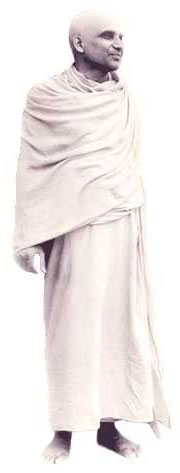
by Swami Krishnananda
The Divine Life Society - Sivananda Ashram, Rishikesh, India

1
1
Chapter 1
Section 2: The Existence of the Supreme Being (Continued)

sarve vedᾱ yat padam ᾱmananti tapᾱṁsi sarvᾱṇi ca yad vadanti,
yad icchanto brahmacaryaṁ caranti, tat te padaṁ saṁgraheṇa bravīmi: aum ity etat. (15)

This mantra is echoed in the Bhagavadgita. Yama says: “I shall tell you about the supreme Abode which you are asking for, which the Vedas extol in all their mantras; for which people do tapas, observe vratas, do charity. It is Aum.”

For what sake do people observe brahmacharya? They control their energies to pierce through the fortress of ignorance, to melt the flint of avidya, kama and karma. No passionate person can do this. No one who lacks brahmacharya can behold this Being. People think that the Vedas speak of many gods, but they speak of one God only. They speak of the same God in different languages. The Veda itself says, ekam sat vipra bahuda vadanti: The one God is spoken of variegatedly in different expressions of ecstasy by the sages to whom the mantras were revealed.

When the Kumaras went to Dakshinamurthy for wisdom, the answer was silence. At least Yama says one word. The Mandukya Upanishad describes what this Om is: a vast reservoir of knowledge and power, the symbol of the Absolute Existence, of Brahman—saguna and nirguna, accessible and inaccessible. In the form of creation, it is accessible; but formless, as the Absolute, it is inaccessible. It is the visible and the invisible. It is in creation, and it stands beyond it as well.

The chant of Om is in itself a great sadhana. It puts the whole system into spiritual balance. “This is the supreme mantra,” says Yama, “the supreme Brahman, akshara.” Akshara means a letter, a word, a phrase. It also means imperishable. So it is all this. If at all you can reach Brahman by any means, it is by Om. It is the Supreme, beyond which there is nothing.

etadd hy evᾱkṣaram brahma, etadd hy evᾱkṣaram param
etadd hy evᾱkṣaram jñᾱtvᾱ, yo yad icchati tasya tat. (16)

etad ᾱlambanaṁ śreṣṭham etad ᾱlambanam param
etad ᾱlambanaṁ jñᾱtvᾱ brahma-loke mahīyate. (17)

These two mantras describe the glory of pranava or omkara, the symbol of the Supreme for the realisation of which people observe all vows, perform austerities and practice meditation. It is the imperishable, and it is both the manifest and the unmanifest, by knowing which one gains access to everything. When you chant or meditate on Om, you have with you whatever you want. You become possessed of all things by realising it. You can possess only that which you have seen and over which you have control. Here, knowledge and power merge into a single experience. One who performs this upasana diffuses his personality into Om. The worship of a sadhaka is to get into the soul of his devata, and when the upasana is complete, the devata enters the worshiper, and both become the same. Pranava is not a symbol in the sense of the term. A word you write on paper may represent a name or description. When you write ‘tree’, you do not have the tree on the paper. You have the symbol which makes you call a tree into consciousness. But Om is not like that. It is a vibration that is produced in our system, and it is the symbol of the symbol; a secondary symbol of Brahman. It is a chant, and not a written word. It is a force or power engulfing our personality when we chant it. Om emanates from the centre of the body, which is the navel. The original condition of pranava is not audible. Coming from the subtle body, it becomes audible only when finally uttered by the mouth. The initiation into it is most important, because this chant and meditation is a great art, and is difficult. Once one flows into the chant of Om, one transcends all mantras. Om has no devata—it is all things, and to enter into it is to enter into creation. It is the supreme imperishable Brahman.

It is Brahman because it gives access to everything, and having experienced it or known it in realisation, or having become it, one becomes fit to possess anything anywhere. The answer to your needs flows to you from all directions when this Supreme becomes manifest in your consciousness, and you become an instrument of its manifestation in this world.

While all other supports will leave you, it will not leave you. It is the best of, and support of, all supports—knowing which you reach brahma-loka. In its manifest form, it represents brahma-loka. And in its unmanifest form, it represents the Absolute, expanding itself gloriously. This is the description of the soul’s liberation by stages, krama-mukti. This syllable Om is the Atman or Brahman about which Nachiketas asked. What is that which transcends everything, was his question. That is Om. Nothing else but Om can become a vehicle for the expression of the Highest, because it is general and not particularised. The content of Om is the Imperishable.

na jᾱyate mriyate vᾱ vipaścin nᾱyaṁ kutaścin na babhῡva kaścit:
ajo nityaḥ śaśvato’yam purᾱṇo na hanyate hanyamᾱne śarīre. (18)

“This Supreme Knower, vipashchit, is not born, never comes into being at any time, and so has no death.” This Atman is the Knower—not a knower in the ordinary sense of the term. He is Knowingness; the capacity to know. He does not know things like the mind knows or sees. The knower of the Atman does not exist. Who is to know the knower? If he is known, he is not the Atman.

When the form changes, the essence does not change. Such is the Atman. He has not come from somewhere; he has no place; he occupies all this universal space. He has neither a cause nor an effect, nor can he go anywhere nor become anything. Creation does not apply to him. The whole of it is a vehicle for him, and nothing happens to him when it changes. “He is unborn, eternal, perpetual; the most ancient. While the body is destroyed, he does not undergo transformation. Most wonderful is he!”

hantᾱ cen manyate hantuṁ hataś cen manyate hatam,
ubhau tau na vijᾱnīto nᾱyaṁ hanti na hanyate. (19)

“If one imagines that He is destroyed when the body is destroyed, or if one imagines that He destroys something, both do not know. Neither the destroyer nor the destroyed know the truth when they think that the Atman goes with the body.” The body appears to move because of it being contained in space, but the Atman is the presupposition of even space, and thus cannot move. He who thinks that He can be destroyed knows not the truth because he thinks He is an object, whereas He is the supreme Subject. People look at the Atman like they look at an object, but He is not that either. He is subtler than the mind and intellect, and hence cannot be seen.

aṇor aṇīyᾱn mahato mahīyᾱn, ᾱtmᾱsya jantor nihito guhᾱyᾱm:
tam akratuḥ paśyati vīta-śoko dhᾱtu-prasᾱdᾱn mahimᾱnam ᾱtmanaḥ. (20)

“Smaller than the smallest atom is the Atman. Most expansive is He, greater than the great. Because He is the innermost existence in every thing, He is seated in the hearts of all beings.” Never is it possible to explain the meaning of the term ‘Atman’, because when you start to explain it, you make Him an object of the world. This Atman, the Soul of all beings, is the Heart; not the physical one that pumps blood, but the Centre of our personality; the very Source of all that we are; the Essence of our being. Shantoyamatma—this Atman is peace. He is the flooding of feeling that rises in us when we lose consciousness of our personality and yet are conscious. When we forget the existence of everything outside ourselves, and ourselves too, the Essence of this is the Atman. The ‘I’ has a soul behind it which is He, speaking through the entire personality. Such is this mysterious, magnificent, elusive Atman who is hidden in all beings. How can we behold Him? “Freed from all sorrows does one behold the Atman.”

Ceasing from willing of all kinds, you behold Him. Any sankalpa prevents His manifestation. If you assert yourself, either by feeling or willing or thinking, you block His ray. To affirm anything is to have sankalpa, and such a one cannot be a yogin. Think not, affirm not, will not—this is the way! He who has no personality, who wants not anything, becomes fit for His realisation. How does He manifest? In whom and when? Dhatuh prasadat—what this means is a matter of controversy. All commentators of the Bhakti School, especially the Vaishvanas, say that it means the grace of God. Dhatu is creator, and prasada is grace. Your effort has to cease, because any effort is an obstacle to His revelation. When effort ceases, God’s grace unveils that Atman. “It is advaita vasana, or an inclination for advaita—realisation by the grace of ishvara,” says Dattatreya in the Guru Gita.

How God’s Grace arises in the jiva is a question difficult to answer, and the difficulty has been accepted by everyone, even by Sankara. Knowledge arises by the will of God. But Sankara’s commentary differs from the one of the Bhakti-School. He interprets ‘dhatuh prasadat’ in an advaitic manner. “Through tranquility of the substances which constitute the personality is the Atman beheld.” Prasada is tranquillity which tends to universality. When the whole personality becomes tranquil, when there is a tendency to universality, the entire person gets focused in consciousness. This is Sankara’s explanation. We may accept both. God is everything. He is the other as well as your own Self. If He is the other, you need God’s grace. But He is within also. God can send His grace from within, but can also send it from without, and then it is that you behold His glory. It is not described in books. It is beheld directly.

The Opposite Characteristics of the Supreme

ᾱsīno dῡraṁ vrajati, śayᾱno yᾱti sarvataḥ:
kastam madᾱmadaṁ devam mad anyo jñᾱtum arharti. (21)

“How can one conceive Him?” Nachiketas may think. Yama answers,”Sitting, He moves to all distances. Lying down in one place, He goes everywhere.” He moves not an inch, and yet He is the fastest of all things, faster than even light. Before our mind reaches brahma-loka, that Atman is already there. Here is the Thing “whose centre is everywhere, but whose circumference is nowhere”, as the mystic saying goes. You cannot describe Him by the words we know. Only by such enigmatic statements is anything said about Him.

Who can know the Atman? “Except to the blessed ones, like me, who has access to Him, He is not known, this God of gods who enjoys and yet does not enjoy, who is the subject as well as the object, who is within and without.”

That fortunate divine person who has the knowledge of truth in its essentiality is a dharma-raja.

aśarīraṁ śarīreṣu, anavastheṣv avasthitam,
mahᾱntaṁ vibhum ᾱtmᾱnam matvᾱ dhīro na śocati. (22)

“Once having beheld the Atman who is bodilessly present in all bodies, who is stable, and in every process of transformation without undergoing any transformation, the wise grieves not and rises into rapture.” Just as breaking a pot does not break the space within it, the conditions that affect the body do not affect the Atman. When the pot moves, the space within does not move, nor is it destroyed. The Atman is present in all bodies, unaffected and unchanging. The bold, heroic and fortunate one who has known Him is the highest being and has no sorrow. Stage by stage we are taken from world-consciousness to that of hiranyagarbha, and finally to consciousness of the Absolute.

The Moral Preparation for Brahma Knowledge

nᾱyam ᾱtmᾱ pravacanena labhyo na medhayᾱ, na bahunᾱ śrutena:
yamevaiṣa vṛṇute tena labhyas tasyaiṣa ᾱtmᾱ vivṛṇute tanῡṁ svᾱm. (23)

This is a very famous, often quoted verse: “Not by speech can He be known; not by the intellect, not even by hearing.” Speech returns baffled. Who expresses speech? The Atman! Who can express the Atman? Even rationality, His partial expression through the buddhi which is a modification of prakriti, cannot express Him. Frail is the intellect when it tries to stretch itself beyond its limits. As a person who cuts the branch on which he sits will fall down, he who tries to know the Atman through the intellect will break. All the faculties of the human mind break down when they try to turn towards the Atman. “He is known only by him whom He chooses.” If God chooses, you may know; otherwise not. This is the interpretation of the Bhakti School. It is God’s grace that He gives you darshan. By a miracle taking place, you can see God; not by ordinary effort.

But Sankara’s interpretation is unique: It is not that someone chooses, because, for Sankara, that someone does not exist to choose. His understanding of this part of the mantra is: “He is beheld only by That which is the seeker himself.” That which you behold is within yourself, is the meaning. Who is the seeker? Is he outside the Atman? God is the prompter even behind the seeker. Sadhana is not possible without Him. Rather than from without, the choice has to come from within. The seeker and the sought are one.

The sought or God is not outside the seeker, choosing him arbitrarily; if it were so, we would have to attribute partiality to Him. Reality is one, and on the basis of this doctrine, Sankara opines that Self-knowledge is an inexplicable wonder: it arises—that is all. It is not caused by the jiva, because he has no freedom. But, if God is the cause, what conditions does He impose? If you say it is the jiva’s karmas, you limit His power; so even that is not a satisfactory explanation. Hence, either you accept that God’s ways are mysterious, ununderstandable, or knowledge is a miracle, and when you say miracle, you cannot say anything. By the passage of time, by the fructification of good deeds, by the process of the universe, by the grace of God—by a mysterious combination of all these factors which the jiva cannot understand, God is revealed. When He reveals Himself, the person (jiva) is no more. God reveals Himself to Himself. It is not an end reached by the effort of human personality.

The whole difficulty is expressed in a single statement: the Atman is the subject, not the object. Thus, He cannot be manipulated by an instrument. Speech, mind and intellect are signified by the terms pravacanena medhaya. Speech is indicative of all senses. So, not through them, not through the mind, not through the intellect can the Atman be realised, because these faculties have a tendency to move outward. They catch the object, not the subject. The mind never catches the mind. Both the mind and intellect work on the dictate of the senses which are untrustworthy, concluding that all reality is confined to phenomena. Any description of the Atman is given by them, and they cannot conceive of anything other than objects.

This mystery of atmasakshatkara is given in the second half of the verse. The Atman chooses the Atman. God chooses God. It is Self-efflorescence. To such a fortunate being who has so withdrawn himself into himself that he is indistinguishable from the Supreme Subject, to such a one is the Atman revealed—not by process, but instantaneously. It is a timeless flash of a sudden consciousness which is called atmasakshatkara. It comes by the maturity of one’s sadhana. The links of this process are indescribable. The last occurrence is such that it cannot be regarded as an effect of all the preceding ones, though it comes as a result of these. It is beyond the causational process.

nᾱvirato duścaritᾱn nᾱśᾱnto nᾱsamᾱhitaḥ
nᾱśᾱnta-mᾱnaso vᾱpi prajñᾱnenainam ᾱpnuyᾱt. (24)

There is no chance of success in any walk of life without moral purification: “Not he who has not ceased from bad conduct; not he who has no tranquillity within; not he who has no collectedness of thought can hope to achieve this Atman.” A person should cease from every kind of evil in thought, word and deed, and then achieve calmness of the senses, and then of the mind and intellect.

The three words: navirata, nasharta, nashantamanasa, represent three processes of self-withdrawal. In the lowest stage, we behave like animals, committing harms of various kinds; a gross attitude of the tendency to see ourselves separate from each other. This apparent isolatedness of individuals and things, which itself is due to wrong thinking, is affirmed by evil conduct. While all is interrelated, we see it as differentiated. This itself is bad enough, and is called a metaphysical evil. But it is made worse by violence for the acquirement or abandonment of things. Then it becomes a moral evil in addition to the metaphysical one. The wrong is not only committed, but also affirmed by harmful conduct, and thus it is a moral vice and against spirituality.

When you have somehow succeeded in extracting yourself from this illusion, you have other difficulties, subtler in nature. Even if you avoid violence of any kind, you will have no tranquillity within. Calmness of mind is different from moral goodness. You may be morally good, but not tranquil in mind. Spirituality is both inner goodness and mental calm. This shanti within becomes an effective instrument in overcoming duscharita or evil conduct. You have to be good even when you are alone, not merely to others, socially.

Even this inactivity of the senses is not total harmony. Spirituality is collectedness of consciousness within, one-pointedness and equilibrium. This is the state known as samahita—a total surrender of personality; not a mathematical, but a spiritual total. This Atman, the completeness of being, is attained only by inner composure; not by being intellectual.

yasya brahma ca kṣatraṁ ca ubhe bhavata odanaḥ
mṛtyur yasyopasecanaṁ ka itthᾱ veda yatra saḥ. (25)

Grand is this Atman, marvel is His being! This is a very interesting and humorous mantra. Literally translated, it means: “He is That to which the brahmin and kshatriya are both food, and death itself is its condiment.”

But there is deeper meaning to it. The brahmana and kshatriya represent knowledge and power, internality and externality, spirit and matter, consciousness and object. The words brahmin and kshatriya do not signify personalities, but the spirit behind them. In the Atman there is a blending of absolute knowledge and power. “Some philosophers hold that there is no power in the Atman, because power means action, and since He is universal, there can be no question of it, because to us power is always particularised, an exercise of authority. But His is shakti, the capacity; not karma or doing something. The whole universe is a standing example of His power. You know how much force is in an atom; it can blow the world. Then what should be the strength of the cosmos which is full of them? And what should be the power of the Atman who is the controller of their source?

Power is not authority, and knowledge is not omniscience—they are more than that. In the Atman, the existence of one is the existence of the other. Brahma, Vishnu and Shiva are represented as One, and as Trinity in the Puranas. So also knowledge, power and the transcendence of individuality—symbolised as death being the condiment—are represented in the Atman. The affirmation of individuality is death. But death is not possible in Him, because in His Being all that you conceive of is transcended. To us, existence is regarded as a qualification of something. We say: “I exist” or “you exist”, but in reality, existence is the substance, and is prior to ‘I’ or ‘you’. The predicate, to make sense, is connected to the subject. But general existence is prior to particular existence, which latter is better called formation. In the case of the Atman, existence is general and absolute. This is paramarthika-satta. In it, individuality is ruled out, and so death has no meaning there; death is dissolved in it. “Such Atman—who can know where He really is?”

This concludes the description of the general nature of the Atman, hinting that when He is misconstrued, He may appear as jiva or individual, which is equated with death.

In the next section, we hear in greater detail of the individual or jiva in his relation to the paramatman.

  1
 
  Catalogue Search Site Map Contact
  Design by Savitr as a Love Offering