Search
 
 
Home Swamiji Ebooks Articles Multimedia Uploads Catalogue Sitemap Contact


Ebook
 
Commentary on the Katha Upanishad

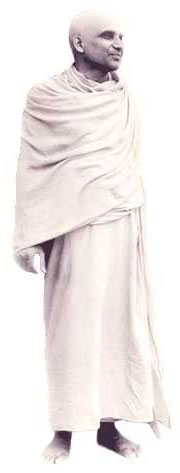
by Swami Krishnananda
The Divine Life Society - Sivananda Ashram, Rishikesh, India

1
1
Chapter 2
Section 2: The Stages of Self-Control (Continued)

Rebirth

hanta ta idaṁ pravakṣyᾱmi guhyam brahma sanᾱtanam,
yathᾱ ca maraṇam prᾱpya ᾱtmᾱ bhavati gautama. (6)

Nachiketas, I shall describe to you the mystery of the atman, and where the soul goes after death.” What happens to a person after death—this answer is attempted to be given in the following mantras. What happens will be determined by the condition of the present and past. It is said that a straight answer cannot be given, because what was in store even before the birth of this body must be taken into consideration.

Since many karmas are being performed—as is usually done by everyone—and since they are done under different impulses: intense, middling and mild, the intense ones create deep-seated impressions in the subconscious mind, but a mild thought produces a mild impression. Every thought is recorded; none gets lost. These impressions are determining factors of the soul’s reincarnation. Strong ones may seek expression earlier than others. It is not that present ones will be taken first, necessarily; it depends on the intensity. For karmas there is no past and present. When they produce an effect called apurva, subtle potency, they get buried in the unconscious and subconscious levels and we do not know what is in store; very powerful ones can express themselves even in this birth, rising to the conscious level.

It is difficult to escape the nemesis of our thoughts, acts and feelings; we are answerable to them. Like our children, they will claim their due share. These karmas are obstinate, powerful and violent if they are given long ropes, and they will hurl us into samsara as they have done now. We cannot say what our next birth will be like because it cannot be said now what karmas will be allotted to us. Jadabharata became a deer, Ahalya a stone and Yamalarjuna the trees. This means that human consciousness can sink to the animal, vegetable and inanimate levels under certain given conditions, but they will revert to the human one again.

When the body dies, all these collected impressions awake and rise to the conscious level, demanding their share; and this is prarabdha-karma meaning new birth. Because we do fresh karmas then, too—as we do not remain a witness to the events—we keep adding new ones. So karmas are fresh actions done with the sense of doer and enjoyership, and mantras six and seven are some sort of reflection on this subject.

The urge for reincarnation testifies to the immortality of the soul. It never ceases its effort toward its liberation, and this effort takes the form of a series of births and deaths, outwardly manifesting the internal nature of its constitution. The soul never gets the supreme satisfaction it hopes for in this endless process of achievements. All its efforts are unfortunately directed by error, and so instead of immortality, there are only endless reincarnations. Things are connected by a perpetual bond of affinity, and emotional affections are propelled by the existence of internal unity. This internal union of things and persons manifests as loves outside. While this spiritual internal unity is the reality, it takes the form of an external attraction and pull when it manifests in the world. The ocean at the bottom is one, but if its waters are being let out through different channels, it can be split.

Human beings, all beings in the phenomenal world, are incapable of diving into this unity at the bottom. They are floating on the surface because their senses are being directed outward right from the time of creation, as mentioned in an earlier mantra; and only a few turn inward. Birth and death are correlative, and when one is there, so is the other. If you are born, you have to die; and if you die, you have to be born. So long as there is recognition of value in the things of the world, there will be love and hatred for them. And so long as there is love and hatred, desire cannot cease—it being an internal urge, and affection for things being an external movement towards the desired object. But nowhere does the spirit find satisfaction because love for objects does not in any way touch the bottom of unity. And thus, love and hatred are far removed from reality. So births and deaths do not cease, and souls enter different bodies in order to experience a set of karmas.

The time of death is the condition of the whole personality when there is a cessation of willpower and freedom of thought on the conscious level. You cannot think as you think now, just as what may happen in deep dream does not occur in our waking state. In the latter, by the power of will, we deliberately suppress certain thoughts and feelings, but in dream there is no such taboo or restriction, and we are free to think as we like in accordance with our deepest feelings. Thus, the last thought comes from the whole of our being. Our deeper layers of personality come to outer manifestation at the time of death. Thought is deliberate thinking, while feelings constitute the real personality of the individual.

Hushed thoughts, suppressed feelings are dangerous and one has to be careful because it is these that we carry with us at the time of death, not our relatives and wealth. The soul repents at the time of death. The Manu Smriti says: “When you depart, your parents, wife etc., will not help you. You carry with you none, nothing, except the good and bad that you have done. In the same way as you wept when you came, you will weep when you go.” Thus, in an unbefriended condition the soul carries its impressions, casting off this physical body here and seeking an atmosphere where it is possible to pay for the samskaras and vasanas it carries with it. Violent samskaras seek expression in the nether regions. Lower and higher realms are not in space and time. The space and time necessary are created by consciousness, just as when you enter into dream, you enter a new space and time. The most enchanting story of Lila and Padma, in the Yoga Vasistha, shows how illusory space and time are, and how different space-time relations can exist simultaneously. Though it looks as if you move in them, you do not actually move. The soul’s movement is relative even in this world, and so it is after death, too. Birth, death and transmigration are conditions of consciousness through which the soul passes.

yonim anye prapadyante śarīratvᾱya dehinaḥ,
sthᾱṇum anye’nusamyanti, yathᾱ karma, yathᾱ śrutam. (7)

“Souls which have not been liberated, enter into wombs of different species for the sake of embodiment. According to their deeds and thoughts, others enter stationary objects.” We cannot say how many species there are, but the scriptures say that the soul passes through eighty-four lakhs of them until it becomes a human being. The soul may enter into any species: a human body, or that of an animal or anything else, as we observed. According to the karmas it has performed and the remnant of force, it enters into lower or higher wombs. It may seek a body in the physical realm, or in some higher, subtler one. It may reach the realm of svarga or that of hell. It may follow the northern course of the sun and go to brahma-loka. It may follow the southern course of the sun and reach pitri-loka. It may attain jivanmukti or sadyo-mukti. Any of these possibilities exists. As the last thought determines the nature of the next birth, we can imagine what type of life one has to lead if a particular thought is to be engendered at the time of death. The last thought, determined by the earlier ones, may be regarded as the fruit of the tree of life.

Thus, the soul can travel through various courses, enter different wombs and species and revert again to the original status when all karmas are exhausted. All this happens under one condition: when our deeds are coupled with our feelings. If we think we have done something, we will have to reap the fruits thereof. This is why Karma Yoga is prescribed. Our actions should not bring about a reaction which will cause rebirth.

ya eṣa supteṣu jᾱgarti kᾱmam kᾱmam puruṣo nirmimᾱṇaḥ,
tad eva śukraṁ tadbrahma tad evᾱmṛtam ucyate,
tasmin lokᾱḥ śritᾱḥ sarve, tad u nᾱtyeti kaś cana: etad vai tat. (8)

Here, the Upanishad shifts the emphasis to another aspect: while the soul is reincarnated in different bodies, it can also liberate itself, if it is honest. For this purpose, it has to investigate itself deeply. Just as there is sensation behind the awareness of objects, thinking behind ordinary sensation, there is consciousness behind thoughts. This consciousness is not the same as mentation; one is not the other. Sensation is to be separated from the awareness of objects, thought from sensation, and consciousness from the thought.

Consciousness is not mind, mind is not sensation, sensation is not object. Yet due to a mix-up of character, one gets superimposed on the other. This mutual superimposition is ananya-adhyasa, and when we investigate it, the independence of consciousness will be realised. This is easily done by analysing the three states of waking, dream and deep sleep. In this mantra, a hint at it is given: even when you are fast asleep, you may glide into the world of dream. The various experiences you have there are similar to the waking condition. As far as their structure is concerned, these two states are the same.

Just as the consciousness that animates mentation, etc., is different from it, consciousness is different from sensation and objects both in waking and dream. And as we know, it exists even in deep sleep, because of which we remember the experiences of the previous day. This shows that consciousness stands as a witness of all states. “That which stands ultimately separated from all phenomena—physical, mental, emotional—is Brahman. That consciousness is the witness of the desire-filled activities in all the states. All worlds hang on this pure atman in His universal nature. No one can go beyond this. Transmigration ends here. This verily is That!” says Yama to Nachiketas.

  1
 
  Catalogue Search Site Map Contact
  Design by Savitr as a Love Offering