Home Swamiji E-books Articles Multimedia Uploads Catalogue Sitemap Contact


Ebook
 
essays in life and eternity

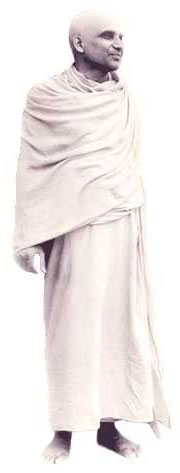
by Swami Krishnananda
The Divine Life Society - Sivananda Ashram, Rishikesh, India

1
1
introduction (Continued)

The subjective side which is the inscrutable unavoidable in all acts of knowledge is for all practical purposes of study the human individual. It is this location of the subjectivity of perspective that is the seat of psychological operations and psychoanalytical investigations. The subject's isolation from the world of perception is indeed a strange occurrence, since such a thing is not either permissible or feasible in a world whose structure cannot exclude that of its so-called perceiver, not even the existence of such a thing. The persistence of an apparently self-contradictory position assumed by the subject in its attempt to contact a world that is outside may well be a proof of the futility of human effort towards a knowledge of reality. Nevertheless, a phenomenal reality of a 'perceived' world is presented before the individualised consciousness which takes such a world as this to be a world of true values, precipitating finally to a negation in consciousness of there being anything at all beyond possible empirical perception. The worlds of science and psychology are such a relative construct obtaining between a reaction produced by the real world so wrongly externalised and the individual perceiving subject whose very existence is worse than precariously relative. Thus far is the field of what we may, with our available knowledge, designate as the world of 'existence'.

But we have also a world of 'values' which we with this conditioned knowledge visualise as objective reality construed in such a way, values which mostly get identified with what are today known as the 'humanities'. The values include the concept of the aim of existence as the very foundation of any further thought along this line. To the materialistic eye value might centre round physical existence, physical comfort and physical security, with a daub of psychic needs reluctantly conceded as an upstart in a mechanistic set-up, in a soulless world of computations and measurements, at best. To the pragmatic utilitarian, we live in a world with which we have to get on, getting on being the end-result of every impulse towards thought and action. If the present condition of things corresponds to the present condition of the mind, and vice-versa, the world should be considered as good enough; but if any one of these two sides tilts heavily on one side of the balance, either the world would appear heartless, even meaningless, or man may look unfitted to live in the world in which he finds himself. But the world has also seen people who could see it with the eye that has also a simultaneous vision of a transcendent element pervading it, who it is that have assured us all value being an offshoot of the eternal longing of the human spirit for utter freedom in a grasp of the Infinite, which factor it is that has to determine and condition the other values such as the material, the emotional, the aesthetic and the religious. Divested of this inner aspiration life's values pale into insignificance, however lofty one may consider them to be. The consistent determination of the eternal value in respect of every earthly value is the law of righteousness and justice, goodness and charitableness. There is, thus, a wholesomeness at the back of even a multiplicity of values conceived by the mind, hinting evidently at the truth that the world has only one value before its eye - its purposiveness and evolution. Truth, goodness and beauty are the logical, ethical and aesthetic values that the mind recognises when it beholds the world through a set of differing faculties such as reason, volition and feeling. Values, then, may, at least to some extent, appear as a necessary reaction set up by the world of reality in respect of the available faculties of human knowledge, which would only mean that our concepts of truth, morality and beauty are relative to the position we occupy in the environment of the world.

Justice would consist not only in conformity to the way the world is made but also the manner in which the deepest self within one would endeavour to recognise itself in other persons also in the requisite degree. Ethical goodness and social harmony are based on this necessary perspective which everyone has to entertain if one is to be regarded as truly educated or cultured. Culture is the refinement of personality consequent upon a vision of the permanent values of life. Education is the progressive development of the human individual through the material, vital, mental, intellectual and social levels to the apprehension of the spiritual reality of life. Civic duty is to love one's neighbour as one's own self, with a proper understanding of who one's neighbour is. 'To do unto others as one would be done by' may well be a standard that we may adopt for the welfare of all. To share with others what we have, as we would wish others to share with us what they have, in the necessary quantity and quality, would be a safe guiding principle. Simple living and high thinking is the motto of the wise one. Here is also the foundation for a proper economy of life. The administration of the political organisation is based on the justice of the law and not merely in its legality. The constitution of the government is actually the voice of the needs of people not only for their material welfare but also for their spiritual progress. The administrator, as the head making decisions, has to stand above himself in decision-making and identify himself with the spirit of the whole nation, and the welfare of all humanity. History is not merely the doings of people but the workings of Nature as a whole whose instruments people are and which in itself is a visible form of the system and action of the eternal order of existence.

Dissatisfaction with the existing condition of things is the beginning of philosophical investigation. On a careful scrutiny it could be observed that nothing can satisfy as long as man's relation to the universe remains a mystery and there is a paltry understanding of the nature and purpose of life. Life is an adjustment of personality with the environment and can assume a meaning only when there is a conscious appreciation of what kind of adjustment it is that is required in order that one may live a meaningful life. It would be seen, as in the case of a definition attempted of one's true brother or neighbour, the environment around one's existence recedes as the horizon when its boundaries are sought to be fixed. The atmosphere in which man lives is actually the endless universe whose features demand a variety of adaptation of personality on the part of man. As the universe is an all-round existence, the required adjustment, too, is an all-round one. The world is neither fractional nor partial, it is a living wholesome entity, one's reaction to which has to be exactly similar in order that one may find oneself in a friendly environment.

Philosophy is the rational foundation of religion, and religion is the practice of philosophy. The development of the religious consciousness in the human individual is the enhancement of dimension in experience achieved through the series of the degrees in which man adjusts himself with the universe. The centrality of this consciousness which occupies the position of the Soul of the Universe may be said to be a reasonable concept of the Almighty God. One's most intense longing, when it reaches its maximum, may well also be regarded as a symptom of God calling through one of His operations in creation. The universe is a total action, and entirely individual actions may not fit into its structure. Here is evidently the central message of the Bhagavad Gita.

The way to salvation is proclaimed as a fourfold endeavour through work, devotion, concentration and knowledge - cognition, emotion, volition and reason, which are the principal operating faculties of human nature, corresponding to the manner in which religious exercise and spiritual practice in a sense of man's endeavouring to rise above himself towards Godhead takes place. Spiritual life is not, as wrongly supposed, different from secular life, nor are the so-called secular needs divested of their spiritual meaning. The well-known classification of life's aims into Dharma, Artha, Kama and Moksha, that is to say, the ordering and regularisation of the material and emotional needs of the person in the light of the ultimate freedom to be attained in eternal life, is the first statement of insight which ancient sages made of the blend of spiritual aspiration and secular demand. As the body and the spirit in the human individual are not isolated departments of activity but are a fusion of physical need with that of one's spiritual aim, the world and God are not contradictory phases but constitute the Form and the Spirit of the Universe.

The outward cooperation and harmony in social life made secure by the institutions of a blending classification of the human community into the directing and the guiding (Brahmana), the administrative and the military or defending (Kshatriya), the trading and the commercial (Vaisya), and the manual and working (Sudra), has been the ancient wisdom behind the survival and stability of the social structure, so that everything is what it is and is not other than what it is. But the further progress towards the real from matter to life, mind, reason and spirit is ensured through the inner transformation of personality by the ascending stages of discipline, study and education (Brahmacharya), keeping oneself abreast with the hard facts of life in their various phases (Garhasthya), non-attachment to things which are not commensurate with an internal progress of the spirit (Vanaprastha), and a total dedication of oneself to the affirmation of the Absolute (Samnyasa). Man rises from his physical individuality to family, community, nation, world and a universal perspective by stages of cultural advancement.

The book is rounded up with the eternal import of the teachings of the Bhagavad Gita presented interpretatively in an intelligible form.

  1
 
  Catalogue Search Site Map Contact
  Design by Savitr as a Love Offering