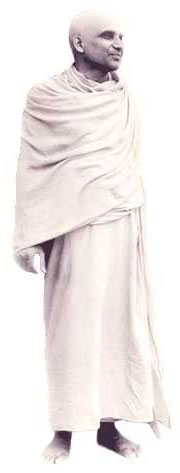
Swami Krishnananda The Divine Life Society Catalogue of Books
Yoga, Meditation, Spiritual Practice Bhagavadgita, Vedanta, Hinduism Upanishads Mysticism Metaphysical Philosophy Poetical Writings
Yoga and Meditation Spirituality Philosophy Scriptures Krishna Siva Devi Christ Swami Sivananda Various Subjects
Photo Gallery Audio Video

The Philosophy of Life

by Swami Krishnananda

PART I: THE FOUNDATIONS OF PHILOSOPHY

Chapter 4: The Atman (Continued)

Arguments for the Existence of the Atman

Some of the salient arguments advanced by Swami Sivananda in proving the existence of an eternal Self can be summarised as follows from his Practice of Vedanta (pp.23-37):

  1. If one closes one’s eyes and imagines for a moment that one is dead or is non-existent, one finds it impossible to do so. The body will be felt as lying down unconscious or dead outside, but one’s consciousness of existence will persist. Consciousness cannot be destroyed. It remains as the eternal Self of the one who tries to deny it. No one feels ‘I am not.’ The existence of the Absolute is known on the ground of its being the Self of everyone.
  2. All proofs are based on consciousness which itself requires no proof. The action of proving presupposes the indubitable presence of the Self. No argument is necessary to establish its existence, for it is the source of all thought and argumentation.
  3. Every effect must have a cause. The changing character of the world shows that it is an effect. It must, therefore, have a cause which contains it wholly. The intelligence that is manifest in the world proves that its cause must be supremely intelligent and unchanging.
  4. The thought of a finite thing implies the existence of the infinite. An idea of finitude cannot arise in the mind unless there is an unconscious acceptance of the presence of what transcends it. Duality presupposes unity. Mortality suggests the possibility of immortality. The relative establishes the Absolute.
  5. Unless there exists a continuous principle equally related to the past, present and future, which cognises everything, we cannot account for remembrance, recognition, etc., which are subject to mental impressions, with reference to place, time and cause. The perception of universal continuity or the presence of the idea of universal causality can be explained only on the basis of an unchanging consciousness which is not itself involved in space, time and causation.
  6. Every subject refers to itself as Aham or ‘I.’ The object is referred to as Idam or ‘this.’ From the point of view of the object it is not an object, but a subject. Objectness is attributed to things by the false ascription by the subject of an adjectival character to things seen outside and by arrogating to itself the position of a substantive. In fact, all things enjoy the character of being the Aham or the ‘I.’ Universal Selfhood is the reality. Objectness is the result of wrong perception caused by an abstraction from the Self of certain aspects of itself.
  7. To break through the cycle of cause and effect one finds it necessary to look for an existence which is essentially changeless and does not depend upon anything second to it. As the senses can perceive only that which is conditioned by space, time and cause, the being transcending these conditions of perception should be supersensible, attributeless, non-individual, supermental, Consciousness.
  8. The senses are not independent perceivers. They require the assistance of the mind in all forms of perception. They act as channels for the mind to function in the reception of knowledge from outside. The mind too ceases to operate in the state of dreamless sleep, leaving the existence of the individual unaffected. The diverse phenomena experienced in the states of waking, dream and dreamless sleep can acquire consistency and meaning only with reference to some permanent element within us, to which all the modifications of knowledge refer. It is the Self which hears, feels, sees, tastes and smells, dreams and knows the phenomenon of sleep, without itself undergoing any modification when these states constantly change themselves. The Self remains as the silent witness of all change.
  9. The physical body cannot be considered to be the real ‘I,’ for it is seen that even if the legs or the hands or some other parts of the body are amputated, the ‘I’ remains still. The body is constituted of the inert elements and is dissociated from experience in dream. The senses, too, cannot be the ‘I,’ for they perform different functions independent of each other, and are synthesised by another unifying principle which cannot be attributed to any of the senses. The essence of the senses is activity, and activity is not being, and without the admission of being no activity can be explained. The vital energy or the Prana also is a state of motion. It is a process and not being. It is inert and has no consciousness. Further, it is seen that consciousness remains even when the vital breath is completely suspended. The mind, again, cannot be the Self, for it does not operate in deep sleep, though one exists in that state. The mind is not being but an activity, and so it cannot by itself account for continuity and uniformity in perception and experience. The mind is a bundle of ideas and is not indivisible. The intellect suffers from the same defects as the mind. It is overcome by delusion, shocked and clouded very often, and even suspended many times. Even under these circumstances one’s Self is seen to persist as an independent element. The intellect is a process of understanding and does not have the character of the Self. The causal body is a mass of ignorance which defies the qualities of intelligence that one always instinctively attributes to oneself. In this state of ignorance there is neither the experience of existence nor of consciousness, which two are the highest values giving meaning to life. Yogis experience in Samadhi a transcendence and overcoming of ignorance, a complete negation of the causal body. The Self reasserts itself in the act of denying it and of attributing its character to the not-self.
  10. In addition to the names and forms of objects we see that they have the character of existence, revelation and causation of joy. The name and the form differ in different objects. They are not uniformly present in all things. But the properties of existence, knowledge and bliss are uniformly associated with an impartial perception of things. Even if an object is cut into pieces or reduced to powder, the existence-knowledge-bliss in it cannot be destroyed, though the name and the form may disappear. The reality of things is Satchidananda. Name and form belong to the world of sense, but Satchidananda remains as eternal being.
  11. A person is loved not because of his body, but because of the Self within. One loves one’s wife and children in and through the Self hidden in the body. If it had been the physical body that was loved, one ought to love even the dead body which is in a cadaveric rigid state with ensuing decomposition. All values are cancelled when the Self is not associated with them.
  12. One’s love for oneself is superior to that which has for others. This fact will become clear when the phenomenon of love is examined carefully. It is directed to the Self ultimately and is subservient to the needs of the Self. Even the selfish love which one exhibits in regard to oneself when, for instance, one tries to save oneself when a house is on fire, by ignoring all property, is explicable only on the basis of the non-objective character of the Self. Even suicide committed on certain occasions proves only the intense attachment which one has to conditions that are supposed to bring satisfaction to the Self. The Self is the Adhishthana or the substratum of all.
  13. The different senses perform functions in accordance with their individual structure and constitution. The eye sees forms, but cannot hear sounds; the ear hears sounds, but cannot see forms, and so on. But all the functions of the various senses are brought together in an integrated perception. It is the Self which sees, hears, etc., through the senses. The world is in the end nothing but the Self manifesting itself. It is the Self that perceives itself in its objectified form as the world. As there cannot be any relation between entities of dissimilar character, the communion of the subject and the object which is the precondition of perception proves that it is the Self that knows itself as others.
  14. In dreamless sleep there are no senses, no objects and no mind, and yet there is the feeling of peace and bliss which is regarded as higher than all other kinds of happiness. How could there be such an intense bliss in sleep when there are no objects and no sensations? Only the Self which persists even in sleep can account for such wonderful experience.
  15. All thought presupposes a thinker. And all thinking implies a consciousness of thinking. We can doubt the validity of all thoughts, feelings and volitions, but we cannot doubt that we doubt. The consciousness behind the act of doubting is not a matter of doubt. This is the Self.
  16. It is seen that every action produces a reaction. Karmas bear fruit. But it is observed that many quit their bodies before enjoying the fructification of their actions. If their self does not continue to exist even after their death, there would be Kritanasa or destruction of merited results of actions. We also notice that there are persons in the world who suffer or enjoy certain states for no visible cause whatsoever. Some lead a happy life from their birth, while others suffer from childhood. If their self did not exist prior to the present birth of theirs, there would be Akritabhyagama or experience of unmerited results. The law of Karma makes us believe that the self ought to have existed eternally before the present birth of an individual, and should exist eternally even after death. The Self knows no cessation of itself.
  17. We observe that many a time what one proposes is disposed otherwise in a manner over which one seems to have no control. There are events which occur independent of human agency and appear to rule over human destiny. Individual caprice is overcome by a larger purpose. This clearly indicates that there is a superhuman power which controls and guides the world. The assertion of individuality brings in its train fear and misery, demonstrating thus the falsity of its character, while a movement towards the non-selfish end brings freedom and happiness, proving thereby the reality of a non-individual objective.
  18. The ordinary man has no restraint over his mind and the senses. This shows that the director of the mind and the senses is different from the individual personality which subjects itself as a slave to these powers. The whole being of man is seen to be commanded and directed by motives and purposes which surpass human understanding. The Kenopanishad declares that the mind and the Prana, together with the senses, are impelled by a supremely intelligent being from within.
  19. The senses appear to be the seers of the objects. But on careful analysis it is discovered that the mind is the seer of which even the senses are objects. A higher investigation of the conditions of unconsciousness, swoon, sleep and Samadhi brings out that the mind is not the real seer or experiencer. We are obliged to stumble upon a consciousness above the mind, to which even the mind is an object. Consciousness is the Self.
  20. The objects seen are many, but the eye which sees them is one. The senses are many, but the mind which knows things through them is one. The mental functions are many, but the consciousness which holds them in unity is one. There cannot be many consciousnesses, for if it were so, their difference would have to be known by another consciousness. Our last resort is an indivisibility of being.