Home Swamiji Ebooks Articles Multimedia Uploads Catalogue Sitemap Contact


Ebook
 
the Philosophy of Life

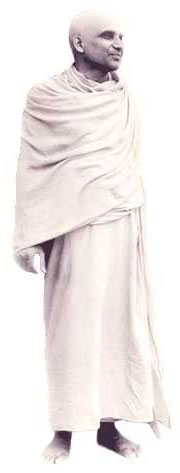
by Swami Krishnananda
The Divine Life Society - Sivananda Ashram, Rishikesh, India

1
1
PART II - A COMPARATIVE STUDY OF SOME WESTERN PHILOSOPHERS
Chapter 11: Immanuel Kant (Continued)

Now Kant, with his theory of the categories and by limiting all knowledge to appearances, tries to give a deathblow to metaphysics, declaring with a hardened intellect that not only our knowledge of the objects of the world, but also our knowledge of soul and God is an appearance, a phenomenon of the categories of the understanding. Metaphysical knowledge is limited to phenomena, there can be no metaphysics of ‘being as being’ or of the ‘That which is’. All such metaphysics is involved in antinomies and paralogisms. Kant shows that we can prove that the world has a beginning in time, and also that it has no beginning in time; that a compound substance consists of simple parts, and also that it does not consist of simple parts; that there is freedom, and also that all things are determined; that there is an absolutely necessary being; and also that there is no such being. Reason cannot establish ultimate truths. We are caught in the grips of phenomenal experience from which we cannot extricate ourselves.

The greatness of Kant lies in that he has thoroughly investigated and grasped the powers and limits of reason, and knows to what extent reason can provide man with genuine knowledge. But his weakness is in that he stretches the functions of reason beyond their limits, to a province over which reason cannot have sway, and coming to the bitter decision that the things-in-themselves cannot be known, tried to floor all attempts to construct a metaphysics of reality. If Hume gave us scepticism, Kant appears to give us agnosticism. Both leave us in the same position as far as our knowledge of reality is concerned. Kant did not notice that his antinomies are not real contradictions but different perspectives, views of reality, all true at some time, at a particular stage in the development of the powers of our knowledge. Kant himself knows that this predicament in which we are landed by the antinomies is due to our falsely supposing that space, time and cause are external and independent of perception. When these forms of perception get identified with knowledge itself, in a manner different from that in which Kant’s categories are contained in the understanding, all these antinomies get resolved in a wholeness of perception which is supersensuous intuition. As it was already shown, the world is real for purposes of certain aspects of life, ideal for certain others, relative at some stage, and non-existent at another. These are not contradictions, but piecemeal views of reality given to the mind which cannot know it as a whole at one stroke. It may appear from an exclusively abstract point of view of the pure reason that our knowledge of reality is phenomenal, but we should say that this is merely an act of supererogation on the part of reason, and an untenable thesis. The effect cannot know its cause without its ceasing to be an effect. It is futile to know reality, as such, through the mind or the reason. Kant admitted this for a reason different from the one which the Vedanta gives. Kant limits experience to sense, understanding and reason, without caring to heed to their presuppositions; so he denies the possibility of a genuine metaphysics of reality. But to the Vedanta, experience does not consist merely in these; there is another faculty of knowledge on which these are based and without which these are meaningless, and which is in a position to build a sound metaphysics, comprehensive and satisfactory. This basis, this presupposition of all relative knowledge, is the soul, the self, the arguer, the doubter, the ground lying behind scepticism, phenomenalism and agnosticism, which is not a matter of doubt, not an appearance, not unknown.

The ideas of freedom and necessity, of the nature of causality and of a necessary being above the world, of an ultimate causeless cause, which for Kant are not above the phenomena of the categories of the understanding, hinge upon the problem of self, of an immutable, incorruptible, immortal, simple, indivisible, spiritual substance or being. For Kant such a self is inconceivable, our concept of it is involved in phenomena, it is not above the finitising categories; hence the concepts of the world and God, too, who bear relations to the self, are phenomenal. Kant says that we know ourselves not as we are but as we appear to ourselves through the categories. We know the world not as it is, but as it appears to us through the categories. We know God not as He is, but as He passes through the mill of our understanding and reason. The world as such, soul, and God are all things-in-themselves and so exist beyond experience.

We cannot, however, charge Kant with the guilt of denying soul, world and God altogether; for what he seems to say is that these cannot be known through sensation, perception, understanding or reason; else there would be no meaning in his positing the things-in-themselves. But the trouble with him is that he would not accept that we have any other kind of experience than the sensuous and the mental. He has, no doubt, the genius to conceive of an intellectual intuition which, he says, if we could possess it, would enable us see things face to face, at once in their true essences. But he denies its reality and accepts it only as a probability; we have only sensuous intuition, we know nothing supersensuous. He denies an immediate intuition of even our own selves and makes the self an object of the discursive reason. His opinion is that one knows oneself but not one’s self. He smacks of Hume when he says that what we know of ourselves are only successive mental states, percepts, and nothing more. We have only a thought of self, not a perception of self, and this thought is a bundle of such states. Kant wavers between this view and the one that radically differentiates him from Hume, the admission of a synthetic or transcendental unity of apperception, a unifying ego, an I, which cannot be identified with a perception or a thought, and without which no knowledge is possible. But this ego of Kant is different from the Atman of the Vedanta, for the former is still an empirical form relating itself to empirical experience. Kant holds that his ego transcends empirical consciousness: but really it cannot do so, for it becomes in his hands an individualised will which ever presses beyond itself. But he distinguishes it from the empirical ego as the Vedanta separates the Atman from the Jiva. The notion of the self appears to Kant to be an object of the discursive reason because he deliberately makes it an object of the reason. We do not know our own existence through the reason, but we have an immediate intuitive apprehension of our being identical with an indivisible consciousness. This fact is too clear to require extra contemplation over it. Our conscious being never becomes an object; it ever persists in being the ground and presupposition of all our processes of knowledge. If the self is to become an object, where is the knowledge of this object to subsist? This knowledge would require another self on which to base itself; and this process of reasoning would end in an infinite regress. The apprehension of the self does not admit of any relations, any process of knowing, any kind of duality in regard to itself. The Vedanta declares that there are certain spiritual laws which we daily experience in our own selves, though indistinctly on account of the presence of a veil of ignorance covering the self, and which exist even prior to the categories of the understanding. As Kant’s a priori categories or principles of knowledge are universal and determine the nature of perceptions and things, so the Vedanta holds that there are principles of knowledge which are more universal and necessary than Kant’s Judgments and categories and which determine even these judgments and categories. Knowledge through the understanding is by no means the only possible one. There is a spiritual realisation of the Absolute, which is not a mere probability but a certainty, a certainty greater than that offered by the fact of our experience of an empirical world of bodies.

Kant is a person who knows, and yet knows not he knows. He makes suggestive statements, comes to the very borderland of reality, but stops there. This he does because he is unable to step beyond the realm of the understanding and finds himself hemmed in from all sides by the laws of the understanding. He says that the concepts or the ideas of the pure reason, the ideas of a unified world, soul and God, are merely regulative principles which reveal the limits of possible knowledge and assert that there is a transcendental reality beyond our possible experience. Now Kant does not know that his assertion of a transcendental reality is impossible merely with the aid of his categories. He owed the possibility of this concept of things-in-themselves to a touch of the supersensuous intuition, though this intuition never came to him as a direct perception. He says that the things-in-themselves can be thought, though not known. Now, how does thought function? It does so through the categories. Can we apply the categories in our thinking the things-in-themselves? No. Then by what means does Kant think them? He cannot say that it is the reason and not the mind that thinks them, for even the reason functions with the categories. It is obvious then that he thinks the things-in-themselves with a faculty transcending the senses and the categories. And this is nothing short of supersensuous intuition.

Kant overlooks the fact that the reason always exhibits an irresistible confidence in its powers to apprehend the things-in-themselves in empirical perception. It refuses to yield to the threats of the understanding that what it knows are mere projections of the relative categories of possible knowledge. It is impossible to disregard the superhuman urge within us which is ever anxious to recognise the supreme need for the indivisible, the infinite, the real in us and in all things. Kant also forgets that he cannot account for the correspondence of the forms of the categories of the mind within with the material of sense-perception outside, unless there is a common conscious background, a unity underlying the two. Knowledge is possible because of an existence which is common to both the subject and the object. If the categories of the understanding do not bear a consciousness-relation to the material supplied by the senses, there would be no adaptation of the former to the latter. The relation between the mind within and the objects outside is a knowledge-relation, and this knowledge or consciousness should be an underlying unity covering both the knower and the known. In other words knowledge conceived as the presupposition and ground of all possible human knowledge in empirical experience is universal existence itself. It is this independent, omnipresent Existence-Consciousness that we term the Absolute.

If, as Kant thinks, the Ideas of reason have merely a regulative use, valid only insofar as they give a unity and order to our knowledge, and if we are to act merely as if their objects exist, we would be living in a world of fancies, imaginations, chimeras; nay, life would be impossible. The meaning that we instinctively discover in life detests any such propositions, and affirms a preciousness and value in existence that cannot be compared with anything we perceive in the world of sense. The Ideas of reason are not mere probabilities or future possibilities, but stand for an eternal fact that is the very basis of the entire structure of possible knowledge here. The possibility of having in our reason such Ideas arises not, as Kant thinks, on account of reason’s abstracting the conditions from the conditioned, but by the very presuppositions made by the reason itself. We proceed not from the conditioned to the unconditioned, but from the unconditioned to the conditioned. We begin with a self-evident unconditioned consciousness which is in us, and without assuming which as a fact there can be no thought, no life. Even the functions of the Ideas of reason as pointers to the limits of experience imply the existence of the limitless, for a knowledge of what is beyond limits is at once included in our knowledge of limits. Descartes was confident that we cannot know ourselves as finite beings without referring this knowledge of ours to the existence of the infinite. Further, how can the conditioned ideas which we have been given by the conceptual categories give rise to the Ideas of the infinite, the unconditioned, the immortal? How can the Idea of the Absolute arise in us if it is not buried already in our own consciousness? How can even an idea or a notion or a concept of the Absolute or the infinite become possible if our consciousness is completely locked within the finite categories? Kant misses to discover in the Ideas of reason real a priori principles which logically precede the categories of the understanding. H. J. Paton, a well-known Kantian scholar, tells us that Kant does not really seem to have argued from the existence of the given in experience to the things-in-themselves as its cause, but rather seemed to regard them as immediately present to us in all appearances. A knowledge that the world is phenomenal is based on an inner conviction, pointing not merely to a probability or a possibility but to the reality of all realities, and suggesting that an immutable being exists transcending phenomena. It is Kant’s intellectual bias that prevents him from accepting these truths which shine before us as in daylight. To the senses the real, no doubt, appears as an abstract idea, for it is far removed from the reach of their knowledge. Kant shows a prejudice in favour of the sole authority of sense-knowledge when he disregards the claims of the Ideas of reason and relegates them to the limbo of probabilities. The organising capacity, the law and order and the passion for unity present in the mind prove the existence of a unitary and indivisible conscious self. Space and time, though empirically real, are transcendentally ideal, and the necessity and universality of the truths of mathematics which is possible only in spatial extension and the time-form felt as a succession of homogeneous moments, and of physics which owes allegiance to the laws of mathematics in conformity with the categories of the understanding, emerges out of the mind as an outward phenomenal expression of the unity underlying the processes of all our knowledge. The immediate consciousness of self requires it to be recognised as unlimited, pervading all phenomena. This consciousness in its essence is the Supreme Being. It is the Isvara of the Vedanta when viewed in relation to the world of experience; it is Brahman in its own being. As the categories of the understanding suit the sense-material in giving us knowledge, the Ideas of reason refer to Ultimate Reality, though we require a deeper insight to appreciate this fact. And even as the categories by themselves have no significance in knowledge without their adaptation to sense-material received in empirical perception, the Ideas of reason have no significance of their own in knowledge if they do not agree with the Reality experienced in supersensuous intuition. These Ideas do not merely constitute a regulative method in life, but act as representations of the Reality existing by its own right. The systematic unity which the Idea of the Supreme Being gives to life is the shadow cast by the existence of the Supreme Being.

Kant’s argument against the ontological proof for the existence of God needs correction. His illustration that the idea of my having some thalers in my pocketbook does not prove that they exist there is not applicable to our concept of God. What Kant needs to be told is that he could not have the idea of thalers if thalers did not have existence. What is important is not whether they exist in the pocketbook or elsewhere, but that they exist; their existence or non-existence in the pocketbook is irrelevant to the question of the Idea of God, for the Idea of God is the Idea of the omnipresent, the infinite, not something which may exist somewhere localised as in the pocket-book or outside it, and so such an Idea should imply the existence of what it points to, even as the idea of thalers proves that thalers do exist. The reason why Kant finds himself obliged to deny existence to God from the Idea of God is that he entirely cuts off thought from reality, while in fact thought at one stage of its being gets identified with reality. The cosmological argument for the existence of God depends on the ontological argument, and gets explained together with it. The contingent demands a cause, the non-contingent, the non-accidental, which is necessary to give completeness and a systematic character to experience. That such a cause does not exist cannot follow from the contingent nature of phenomena; on the other hand, contingent phenomena affirm an absolute ground. We are bound to admit the existence of an Intelligent Being on which phenomena depend. In his account of the physico-theological proof for the existence of God Kant makes God an Architect of the world building upon a hampering material, but does not think that God can be shown to be the creator of the world, subjecting the world to His Will. It is a false abstraction of the Idea of God from the nature of things that is responsible for Kant’s supposition that God is an outward agency working on a given material. The Idea of God includes the ideas of omnipresence, eternity and infinity, which forbid any attempt to exclude God’s presence from the world. God can have meaning only when He comprehends the world in the very existence of His consciousness, which not only takes Him beyond even creatorship but makes Him the Absolute-Existence. To the Vedanta, the Absolute is the only reality, which includes and transcends every form of experience. This Absolute is Existence-Consciousness-Bliss.

  1
 
  Catalogue Search Site Map Contact
  Design by Savitr as a Love Offering