Search
 
 
Home swamiji Ebooks Articles Multimedia Uploads Catalogue Sitemap Contact


Ebook
 
Yoga as a Universal Science

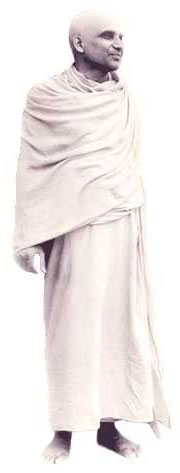
by Swami Krishnananda
The Divine Life Society - Sivananda Ashram, Rishikesh, India

1
1
Chapter 4: PRELIMINARY INSTRUCTIONS ON YOGA PRACTICE (Continued)
1
Vrittis - The Fundamental Source of Life's Difficulties

Vairagya and Abhyasa are the two essential words with which we have to be acquainted when we study Patanjali's Yoga. Vairagya is defined in many ways, translated in many ways. Renunciation, self-abnegation, and abandonment of the temporary values of life are usually associated with the term Vairagya. To be in a state of Yoga is, in a way, to behold the objects of the world as God Himself beholds them. If one sees things as God sees, one is in a state of Yoga. It is very difficult to understand what could be that state, though one may be able to appreciate that it is the state of total impersonality of awareness of things, inseparable from oneself. The whole universe is considered as the body of God in almost all the religions. And one does not look upon one's own body as an object of attraction. So, one should develop an impersonality of outlook in respect of things which appear to be outside on account of their so-called location in space and time. God has no space, and no time also. So, to look at things as God beholds them would be to transcend space and time. This technique - of overcoming the limitations of space and time is meditation, Dhyana. It leads to Samadhi, which is the pinnacle of Yoga.

In the beginning, this transcendence of space and time cannot be achieved. Teachers of Yoga tell us, that even in the practice of Vairagya or renunciation, there are stages. One cannot suddenly jump to the summit of Vairagya at once. The absence of taste for things is not easily practicable. The taste remains, even when one may be physically away from the objects of attraction. We love objects, though we may not see them with our eyes. Achievement of Vairagya is possible only through a gradual conducting of oneself on right lines. One should seat himself in a composed manner and should conduct this analysis. In the beginning, it appears that the problems are outside in the world. "The people around me are my difficulties", so says any person complaining about circumstances. Nobody would accept that one's own self is the source of the problems. So, this is the initial result that will follow from an analysis of the problems of life. But later on, if one is a little more philosophical and dispassionate in his analysis, he will realise that it is not the persons and things outside, but rather his own relationship with those persons and things which constitute his problem. Because, the experiences in life, whether pleasurable or otherwise, are brought about by relationships among things. If there is no kind of a relationship between the subject and the object, there would be no experience of the object. So, the experience of pleasure or pain, the feeling of problems, is due to a particular type of relationship that subsists between oneself and others. So, from the grossest stage of complaining against other persons and things as the source of our difficulties, we rise a little higher to the recognition of a more subtle reason behind our difficulties, namely, spatial and temporal relationship. The persons and things are not really the problem; our relationship with them is the problem. It is not a properly adjusted relationship. There is a maladjustment in that relationship. So, this knowledge is a little superior compared to the earlier feeling that things as such are the source of our difficulty. But, what are relationships, but psychological operations. One's relationship with another is nothing but the mental operation of the former in respect of the latter. So, life's difficulty arises due to the mental operations of this person or that person, of this thing or that thing.

To recapitulate: The things of the world are not the source of our difficulty; they are not the problem. The relationship to things is the source, and the relationship is nothing but the mental activity. We now come to the very root of the matter. The Vrittis of the mind are the problem behind all the difficulties in one's adjustment in life. Until the operations of the mind are restrained and directed in the right channel, there is the possibility of wrong adjustments with others and the consequential problems. The mind is the source of all troubles. So, Vairagya has to be achieved by stages of self-reflection and self-analysis.

What is Vairagya? What is renunciation? Renunciation does not mean a renunciation of persons and things, because they are not the sources of the trouble. The sources of the trouble are wrong relationships; and renunciation means the renunciation of these wrong relationships. And what are relationships, but attitudes of the mind, actually speaking? So, Vairagya is a mental condition. It is not a physical activity. It is not something that one does outwardly in society. It is rather what one thinks in one's mind. The thought is the act. What man thinks, that he is. So, the complete mastery which Patanjali speaks of, in his Sutra in respect of Vairagya, is a graduated process of attainment and one has to go on with this practice daily, hourly, without any remission.

Vairagya and Abhyasa Should Go Together

The Sutra (I-12) of Patanjali says that Vairagya and Abhyasa should go together: Abhyasa-vairagyabhyam tannirodhah. The modifications of the mind, whether painful or non-painful, are controlled by Vairagya and Abhyasa. Because, these modifications of the mind, painful and non-painful, are the cause of all the misrepresentations in life, which we call Samsara. Abhyasa and Vairagya go together, and often we feel that they cannot be separated, one from the other. A persistent effort in the direction of the detachment of oneself from all false values in life is the essence of spiritual practice or Abhyasa, though it has a more positive side also. Here, as in the medical treatment of an illness a twofold process is involved, namely, the removal of the illness and the helping of the growth of positive health. The medicines that are administered to a sick person have two purposes to fulfil, namely, to remove the disease and also to improve the health. A concentration of our attention, our consciousness, on the Reality in its own status, may be Abhyasa or true practice. But, it is accompanied also by detachment from the falsity of notions, of perceptions. The two have to go together, in the same way as we walk with both the legs and not with only one! As the bird flies with its two wings and not with only one wing, the two processes are to proceed simultaneously. This is an essential requirement. At one and the same time, we must withdraw ourselves from the false relationships that we have developed in relation to things, and also direct our consciousness to concentrate on the nature of Reality. But these are questions of detail which have to be sorted out in the presence of a Guru. Because, a general instruction about every little bit of detail in Yoga cannot be given to the masses. We can give only an outline about the general process or the Samanya Dharma of Yoga, but the Visesha Dharma or the particular details will vary from individual to individual. There are personal difficulties which each individual may feel, which each seeker may have in himself or herself, besides the general problems of life which are common to all. So, we are discussing mostly the general aspects of Yoga, not the details. The details are not to be taught in public and cannot also be read in a book, because they are purely personal and they vary with each individual. In this matter, proper instruction has to be given individually or isolatedly, in respect of each case, just as a physician administers drugs to each individual patient separately. Because, in the practice of Vairagya, and also in positive spiritual practice or Abhyasa, the techniques naturally have to vary, according to the physical condition, and also the psychological state, of the seeker concerned.

Yoga Demands Our Whole Life

A very important caution is given again by Patanjali in his Sutra. We cannot practise Yoga in a slipshod manner, with a half-hearted attitude. Yoga demands a dedicated spirit on the part of the seeker. It calls for a complete surrender of the individual personality to the great purpose to be achieved through Yoga. It is not possible to give half of one's life to Yoga and half to something else. Yoga demands our whole life and not just a part of our life. There need be no fear that to be wholly devoted to Yoga implies running away from family circumstances and severance of oneself from the usual duties of life. This mistake again has to be removed from the mind by a correct understanding of what Vairagya is. Yoga encompasses our whole life and not a part of our life, because whenever we have an attitude towards anything, it is a whole attitude and not merely a partial attitude. Our outlook of life is a total encounter of consciousness in respect of things in general. The outlook may be complete, and has to be complete, though this complete outlook may require us to perform various functions in respect of the particular object about which we have this total outlook. The various duties of life are part and parcel of our total outlook of life. As such, we cannot run away from them; we cannot cut them off.

So, we have to understand clearly and carefully what it means to say that Yoga is a total dedication, a whole-souled surrender, and a complete attitude. Everyone has a view of things in general. In that sense, everyone has a philosophy. Nobody is a non-philosopher. A person's attitude towards things in general, the world over, is his philosophy; and he conducts his activities on the basis of this outlook that he has about things in general. So, in that sense, it may be said that he has always a total outlook. And in Yoga, this total outlook should be in consonance with the true nature of things. This is philosophical analysis again.

Everyday the practice has to be undergone, nay, every moment of time. Patanjali says: Dirgha-kala-nairantarya... One gets established in Yoga by hard, unremitting practice, for a long time conducted. All the time, the mind must be in it. All the time the seeker must be aware of the fact that he is a student of Yoga and must remain in a state of Yoga. As a matter of fact, what is the gospel of the Bhagavad Gita but this great teaching that one has to be perpetually in a state of Yoga, even when one is doing the least of actions in life? That is Karma Yoga. Karma Yoga is not worship in temples or doing something some time only during the day. Karma Yoga is maintaining the right mental attitude behind every kind of activity, even the least of them. So, the outlook or the attitude wherein lies true Yoga is to be a perpetual mental affair. It has to be carried on for a protracted period. What is protracted period? Throughout life, Dirgha-kala means a long time, and Yoga practice has to be carried on for a long time, till the last breath of one's life. And when it is carried on like this continuously, everyday, it should be without remission of effort, which means to say, that there should be no break in the practice and no severance of oneself from the right internal outlook. There should be no split or gap in this continuous process that is Yoga.

Yoga Should Be Practised with Zeal and Love

And then, the most important of all pieces of advice which come to us from the great adept Patanjali is that we should have a true love for Yoga. One practises Yoga, not because one wants to become a teacher or gain fame, but because one wishes to achieve perfection. Yoga is considered by the ancient masters as far, far superior in affection to thousands of fathers and mothers. Yoga protects us when we protect Yoga. Yoga loves us when we love Yoga. What is the meaning of loving Yoga? Yoga is not a person; it is not a thing. It is not something existent. How can one love it? Yoga is not abstract thinking. It is an outlook, an attitude that we establish with reference to all things, everywhere. All things become friendly. Love of Yoga is not love of the word called 'Yoga'. It is not even a notion in our mind. It is inseparable from the existence of things. Thought is being, and being is thought, finally. Love is the same as the object which we love and vice versa. The two cannot be separated. The Yogi becomes a lover of all beings - sarva bhuta hite ratah - and all beings love him. "Sarva diso balim asmai haranti" says the Upanishad, The student of Yoga has to love all beings as his own self, as it were - nay, more than his own self. And then, all beings love him. This is because world experience is a question of action and reaction. Whatever attitude we project towards things, that attitude is meted out to us in return. Whatever we think of others, that will be thought of about us also. Whatever we do to others, will be done to us. Whatever be our notion about others outside, that will be the notion others will have about us also. This is very interesting and very important to note. So, Yoga is to be practised with tremendous zeal and a feeling of intense love surpassing all other temporal loves in this world, a love which swallows up every other love. It is not to be one of the loves, one among the many. No. It is to be the only love that the seeker can have. When the seeker loves Yoga, that love embraces and encompasses everything. Because, everything is in Yoga. That is why Patanjali says that Yoga is to be practised with a deep sense of affection for it, as if it were one's mother or father. And when we conduct ourselves in Yoga in this manner, we will be established in it. For a long time, we have to practise it with unremitting effort and great love. These are the preliminary instructions of the great Yoga teacher Patanjali.

It would be in the interest of all seekers of Yoga to go slowly, and not in a hurry. Each step should be a considered step, and one should not walk on slippery ground. The student of Yoga should not feel the necessity, later on, to retrace his steps, because of any mistake that he might commit early in the practice. It is better to go slow, take time to reach the succeeding step, rather than hurry and then retrace one's steps to correct a mistake or to avoid the committal of a mistake.

Internal Purification through Karma, Upasana and Jnana

The essential Yogic practice is meditation. But to reach this state, one has to pass through various purificatory, earlier stages. Teachers of Yoga and Vedanta have been untiringly telling us that the heights of Yoga are reached only as the fruit of sustained effort in the direction of internal purification, which has to be achieved through service and worship. We are often told that Karma, Upasana and Jnana are the three stages of spiritual attainment. These are familiar terms - Karma, Upasana and Jnana or service, worship and wisdom. We are unable to free ourselves totally from selfishness in our day-to-day life. We have some selfishness always. A subtle selfishness is there even in the most advanced spiritual personalities. It can be got over only by exercising an unselfish attitude towards other people, which is easily called service. Unselfish service is regarded as the essential prerequisite in the purificatory processes necessary for the final practice of Yoga. This unselfish service to others is very important; and one should not imagine that one is in a higher state, so that one can get out of this necessity to practise selfless service. Service does not necessarily mean providing physical amenities to people, though that also is a part of service. A charitable disposition towards others is the essence of service. Charity of feeling is the greatest of charities. Giving donations of some dollars is not necessarily charity. That is only an outward expression of one's internal recognition of the value of people outside. The discovery of great spiritual value in all things in the world is the essence of the serviceful outlook of life. We do not serve people because they are inferior to us, or because they are beggars and we are rich. That is not the reason why we do service. Service is the outcome of our feeling that the great aspiration that is throbbing in our heart is also present in other hearts. Social circumstances might have converted the other people into what they are, but that is not their essential being. The charitable feeling, which is the essence of service, arises on account of a recognition of Divinity in all things, rather than on account of the discovery that others are poor fellows, beggars on the road, and unwanted units in society. There is no putting on of a superior attitude in unselfish service. We do not become important men, because we do service. It would be a blunder to think so. Perhaps, one who is capable of doing the highest service regards himself as the humblest of people. He is the last and the least and not the first. These are again subtle points which one has to be able to appreciate in one's own self, by careful examination of oneself daily.

A prayer for the welfare of all beings from the bottom of one's heart is also a great service. This is one of the greatest forms of service that one can do. Prayer can work miracles and wonders which even the most powerful productions of atoms cannot achieve, cannot do. "More things are wrought by prayer than this world dreams of" is the great oracle of a poet. To pray for the welfare of all beings is the greatest of services, and we can reduce the pains of people by invoking the miraculous intervention of divine hands. Here, in the offering of prayer, we have to see to it that it arises from our deepest feelings in the heart and not merely from the lips that utter: "O Lord! Help us". Lip prayer is not prayer. Unless these cries come from our soul, they cannot be regarded as real prayers.

It is very difficult to know where our soul is. We have lost our soul! We are only shells of personalities, broken pieces and flints of individuals. We are not essences. Our essences have been dried up by our wanderings in the desert of life, in search of pleasures which we cannot have. So, great masters like Swami Sivanandaji Maharaj were untiringly insisting on the necessity for service, which has to be understood in its proper connotation. By this means we can free ourselves and live the life of a St. Francis of Assisi, or a Jesus Christ, or a Buddha. It is a matter for surprise that such persons should have existed in the world at all. They personify the complete abnegation of one's very being itself in the interest of the welfare of all. Such abnegation consummates itself in the seeing of God in all things. Thus, it is the recognition of divinity in things, and a participation in the life of people, by an inward attunement of our feelings with them, which may help us in outward service. The inward feeling is most important and a mind thus purified becomes fit for the worship of God. An impure mind cannot adore God. That is why Karma or selfless service becomes necessary to purify the mind and make it fit for Upasana or the worship of God.

  1
 
  Catalogue Search Site Map Contact
  Design by Savitr as a Love Offering