Home Swamiji E-books Articles Multimedia Uploads Catalogue Sitemap Contact


Articles
 
KATHOPANISHAD: The Science of
the Inner Life (Continued)

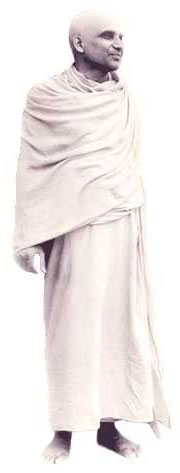
by Swami Krishnananda
The Divine Life Society - Sivananda Ashram, Rishikesh, India

1
1

The Tree of Samsara

The tree of life has its roots upwards in the unmanifest, which, again, is rooted in the Divine Being; its branches spread below as the manifested universe. This tree is inclusive of great miseries like birth; old age, grief and death. It appears to be of a different nature every moment. It is now seen and now not seen, like a jugglery or water in the mirage, or the city of the clouds. It can be felled down like a tree, and it has a beginning and an end, like a tree. It is essenceless like the sapless plantain tree. It is the cause of great doubts and confusions in the minds of the non-discriminating. Its true nature is not ascertained even by aspirants after knowledge. Its meaning is found in the original essence of Brahman which is ascertained in the Vedanta-Sastra. This tree has grown out of the potency of ignorance, desire and action. It has come out of the sprout of Hiranyagarbha, who combines in himself cosmic knowledge and action. The branches of this tree consist of the various subtle bodies of the individuals. It has a proud stature through being watered by the desires and cravings of the individuals. Its buds consist of the objects of the mind and the senses. Its leaves consist of the knowledge that is obtained from scripture, tradition, logic and learning. It has the flowers of the impulses for sacrifice, charity, austerity, etc. Its essence is the experience of pleasure and pain. Its root is fastened tightly, because of the constant watering through the intense longings for the different objects on which all individuals depend. It is inhabited by several birds called individuals from Brahma down to inanimate matter. It is full of tumultuous noises like those of weeping, shouting, playing, joking, singing, dancing, busily running, and such other sounds created by the experiences of exhilaration and grief, giving rise to pleasure and pain. This tree can be cut down with the strong weapon of detachment consequent upon the realisation of the identity of the Self with Brahman, through hearing of the Vedanta texts, contemplating on their meaning and profound meditation thereon. This tree shakes, being blown by the wind of the various desires and actions of the individuals. Its different parts are the many worlds inhabited by celestial beings, human beings, beasts, demons, etc. The beginning of this tree is not known. It extends everywhere and its form is incomprehensible. This tree is ultimately based on the pure essence of self-luminous consciousness. The enigmatic character of this tree is accounted for by the incomprehensible nature of Brahman in which it is rooted. This tree is essentially unreal, because it is experienced as a modification. The Sruti says that all modification is only a play of speech, a mere name, and therefore false. This Brahman which is the reality behind this universal tree is transcended by nothing, and other than it there is no reality. This whole universe works systematically, being controlled by the Supreme Life-Principle, viz., Brahman. This Brahman is like a great terror, like an uplifted thunderbolt, because none can transgress its law. Its rule is relentless, and anyone who tries to go against its law, reaps intense sorrow. But, those who know the Truth of Brahman become Immortal. By fear of this Supreme Being fire burns; by fear the sun shines; by fear Indra and Vayu perform their functions; by fear death does its duty. Fire, sun and the other, principles of the universe, including the process of change and death, are the different phases or aspects of the one Brahman. Hence, they are all united in its self-identical nature which never ceases to be. It is not possible for any individual to live according to his personal inclinations without obeying the law of the Infinite. A part cannot exist independent of the whole; the part always should and does partake of the nature of the whole. Hence, everyone is controlled by this whole, viz., Brahman.

If knowledge rises in a person before the death of this body, he shall attain liberation and will not be born again. Rebirth is the result of the absence of Self-knowledge and the presence of desire at the time of casting off the physical body. Therefore this Atman has to be realised in this life itself, so that the pain of another life may be put an end to. Among all the different regions of existence, the human region is the best suited for the purpose of the attainment of Self-knowledge. No doubt, the region of the creator is better than the human region and is nearest to Brahman-knowledge, but the individual has to spend a long time in its attempt to reach the region of the creator and then to acquire Self-knowledge. In the human world, the Self is experienced as something like a reflection of an object in a mirror. But in the region of the creator, the distinction experienced between the true Self and the phenomenal self is like that between light and darkness. Therefore, here, one has the highest spiritual experience. But, in other worlds, the attainment of Self-knowledge is not possible, because the inhabitants there are either absolutely devoid of knowledge or engrossed in external enjoyment or sunk in great grief, or not possessed of the required instruments for effort towards Self-realisation. The human being, therefore, should try to attain Self-knowledge here itself, and not after going to another region.

The Practice of Yoga

This Atman is not seen through the eyes, nor is it perceived through any of the other senses, as it never becomes an object of itself. It is known only when the centre of personality is dissolved through the absorption of the factors causing individuality, viz., the mind and the intellect, into the Atman. Equanimity of inner vision is the same as spiritual knowledge, and it cannot be had as long as the mind and the intellect function in their own fashion. The Atman cannot be sought in external conditions, but it can be known and realised through a reverting from externals to eternal being. It is this introversion that enables one to enter into the very substance of being. This state of spiritual equilibrium is attained when the five senses of knowledge rest together with the mind, and when the intellect does not perform its functions of objective knowledge. Yoga consists in the withholding of all individual functions, beginning from the physical body and ending in the intellect, and the directing of the whole energy to the apperception of consciousness. It is, in other words, a steadying of the power of consciousness and making it rest in itself, in the state of perfection and motionlessness. Yoga and Jnana differ from each other in the sense that the former is the negative process of the annihilation of personal consciousness, whereas the latter is the positive realisation and experience of infinite consciousness. In a general sense, Yoga may include Jnana also, if Yoga is taken to mean the method of the attainment of the Brahman. In the practice of Yoga, one should become very vigilant, and not become proud or heedless. Yoga comes and goes. It does not rest for long, unless great care is taken in the maintenance of that consciousness of Oneness. Yoga is the separation from contact with pain. In this state, the powers working through the external senses and the internal senses are made to go back to their source, viz., the power of Self-consciousness, where they rest in perfect peace. The noise of the senses ceases, and, as a consequence of this, pain and sorrow also are negated.

Brahman should be conceived of as existence, between the two logical conceptions of existence and non-existence. Existence is the correlative of non-existence, and, hence, even non-existence may appear to have as much validity as existence. But the conception of non-existence, though logically deducible, is practically impossible, as the conception of Brahman as non-existence involves the negation of the consciousness of one's own existence, also. Therefore, Brahman should be known as existence, though from the highest standpoint this, too, is a limited conception. As far as the human being is concerned, the conception of existence is not limited in the ordinary way, because, it is not possible to set boundaries to existence. The idea of existence leads to the realisation of the transcendental Truth which includes and goes beyond the ideas of existence and non-existence.

When all the desires that are lodged in the heart are cast off, the mortal experiences the Immortal, and one becomes Brahman, here itself. Moksha is the realisation of that which exists always and everywhere. Therefore, it can be realised at any place, provided the obstructions to this realisation are removed. These obstructions are desires for objective experience. Removal of desires is the same as the destruction of mind. The realisation of the Self does not involve a movement towards any external condition, but it is the extinction and transcendence of personality in the Absolute. It is like a drop dissolving in the ocean, or rather, the ocean itself becoming aware that it is ocean.

The Yogavasishtha makes reference to two methods of overcoming and transcending the mind, which is the stuff of individuality - Yoga and Jnana. Vasishtha defines Yoga as Vrittinirodha or inhibition of psychological functions, and Jnana as Samyagavekshana or right perception. Generally, Yoga is to be understood in the sense of that Integral Method whereby the individual is attuned to the Supreme Being. It is neither a creed nor a tradition, but the law governing the universe, and made manifest in the conscious activity of the individual. Yoga is the process of the evolution of the finite to the Infinite, consciously and deliberately systematised, and thus accelerated. In Yoga, the experiences of several future possible lives are compressed into those of one life or the least possible number of lives. Yoga is, therefore, nothing out-of-the-way or unconnected with the normal life of man. Truly, it is the only normal life, and a life bereft of the consciousness of Yoga, in some degree at least, may be said to be below the normal. To be forced to be something and to act in certain ways, instinctively, without the conscious and volitional activity of oneself, is not the glory of man. Yoga is to know the real relation which man bears to the universe as a whole, and to the Divine Being which is his Higher Self. Not to know this relation is to grope blindly in darkness and to be merely confined to the animal consciousness of subhuman beings. Yoga is not cutting oneself away from the reality of life in the world, but it is the understanding and realisation of the real meaning of existence in order to live a life of the essential freedom and bliss of one's deepest consciousness. In other words, it is to be a friend and citizen of the whole universe, to feel oneself in all beings, to absorb into oneself the whole constitution of the universe, to be the Soul of the universe. This is the meaning of Yoga, understood in its general sense.

But Yoga has also a special and particularised meaning, as mentioned by Vasishtha. This is identical with the technical Yoga system of Patanjali. It consists in the inhibition of all the modifications of the mind-stuff. In this system, the faculty which plays the most important part is the will, not so much the understanding or the feeling. By sheer dint of determination and decision based on faith in the holy tradition and the instructions of the teacher, one fixes one's consciousness on the ideal of one's attainment. All Vrittis or psychoses are resolutely banished from consciousness by resort to various methods, such as thinking of the opposite of the obstructing psychosis, cultivation of virtuous qualities, practice of the abandonment of objects and enjoyments both seen and heard, complete restraint of the senses, fast, continence, positive love for all beings, truth-speaking, non-covetousness, cleanliness of body and of internal motive, contentment. with what one obtains independent of effort, austerity, study of sacred scriptures, recitation of the Name of God, prayer, self-surrender, steady posture of the body, harmonisation of the vital energy, etc. By these methods the Yogi withdraws his senses from their respective objects, and concentrates his mind on the Supreme Being. Before the attainment of actual concentration on God, one may pass through various lower stages of concentration on grosser objects which are more easily comprehended and taken as means of steadying the activities of the mind. Thus, with a negative method of abstraction of the functions of individuality, one attains That which is at the background of all individual functions.

Jnana is Samyagavekshana, or right vision of things. It is to behold the world as it is really, not merely as it appears to the individual functions of knowledge. It is to fix the consciousness on the Universal Substance, of which all things are made. Jnana is the knowledge that the Self is the All, and that All is the Self. This Self is not the individual subject of knowledge, but the Self of the whole universe, the Consciousness to which the whole universe can be reduced. Jnana is to experience nothing objective, nothing external to one's consciousness, and to have the direct realisation of Eternity and Infinity. Jnana is the constant awareness of the Immortal Brahman. This awareness has an empirical as well as an absolute aspect. Empirically, it is called Brahmabhavana or Brahmabhyasa, which consists in ceaselessly thinking of and feeling the presence of Brahman, speaking of Brahman, discoursing with one another on Brahman, and totally resting in the consciousness of Brahman, in all activities of life. In its absolute aspect, it is to be merged in Brahman, to be in the state of perpetual Samadhi or Kaivalya, to be perfectly free from the consciousness of a second to oneself, to glory in the Absolute, and to be supremely blessed. This latter stage follows the former logically, when all the impressions of past actions are experienced and destroyed, when the body drops, and the individual enters the Absolute, as a river enters the ocean. This 'entering the ocean' is, of course, an analogy from the human standpoint, for, really, there was never a river, never is, and never will be. There was, is and will be only the ocean, and the ocean has to know that it is. Only the Absolute can be, and is, and liberation is the consciousness of the Absolute. Yoga and Jnana aim at this supreme beatitude.

Additional Exhortations from the Mundakopanishad

The Mundakopanishad, as far as its contents are concerned, is, in many respects, a sequel to the teachings of the Kathopanishad. The one supplements the other, the Katha furnishing information on the earlier stages of spiritual endeavour and the practice of Sadhana and Yoga, and the Mundaka going further into the details of the practice and the nature of final liberation in the Absolute. The initial instruction in the Mundaka is that a search for Truth should be launched upon after one carefully examines the character of the world of sense and of works, whereby a distaste for objects spontaneously arises in the mind on the knowledge of the fact that nothing of the realm of impermanence can be an adequate means to the realisation of the permanent or the everlasting, there being no conceivable link between the two patterns of experience. Upon arriving at this stage of understanding, the student goes humbly to the Teacher, who is well versed in the sacred lore (Srotriya) and is established in the wisdom of Brahman (Brahmanishtha). To such a well-prepared disciple does the Master offer initiation into the divine mysteries.

The first experience into which the student is introduced is that of the Cosmic Being - Virat: "The heavens are His head; the sun and moon are His eyes; the quarters are His ears; the Vedas are His speech; the air is His breath; the universe is His heart; the earth is His footstool: - such is the great Soul of all beings." From Him do emanate Time and Space, gods, men, beasts, birds, food, relationships both perceptional and social, rules of conduct, bodies and worlds. This Supreme Being is all this universe: one who knows this secret hidden in the cave of one's heart tears asunder the knot of ignorance.

To reach Him, the way is meditation. In a symbology, the method of meditation is described. "The Pranava (OM) is the bow; the self is the arrow; Brahman is the target; this target is to be aimed at by one well trained in vigilance and one-pointedness of attention; then does one become one with Brahman, even as the arrow merges into its target, well hit." "By taking hold of the mighty weapon of the bow of the wisdom of the Upanishads, one should fix on it the arrow sharpened with continued contemplation and worship; the bow is to be bent and drawn forth with the force of an ardent yearning for the goal; thus, do you hit that target of the Imperishable Brahman, my dear!" When this is achieved, when the soul unites itself with Brahman, Brahman is seen everywhere. "The immortal Brahman is in the front, Brahman behind, Brahman to the right, Brahman to the left, Brahman above, Brahman below; all this universe, is just this Brahman, the Great, spread out everywhere."

Though this is the highest form of spiritual practice prescribed in the Mundaka, it also provides us with a slightly lesser and easier technique intended for those who are of more moderate endowments. "God and the individual are like two birds perching on the same tree. These two birds are of like plumage and are eternal friends. One of these two eats the sweet fruit of the tree, and is bound; while the other merely looks on eating nothing." "Though seated in the same tree, the individual is sunk in grief due to impotence caused by delusion; when he beholds the other, the adorable one, the master, he becomes freed from sorrow." The contact of the soul with objects brought about by desire for them is the eating of the forbidden fruit. The Lord supreme is God, by a vision of whom the soul is lifted to the exaltation of immortal existence. Such a soul which is free "rejoices in itself, sports with itself, and its activity consists in the realisation of universality."

"But he who runs after desires, cherishing them in his heart, is born in those respective places where he can fulfil the desires; whereas of him whose desires have reached their consummation (on account of sublimation), all desires melt away here itself (in the realisation of infinitude), due to having attained to perfection of the Self." Having attained Him, the Supreme Being, the sages, satisfied in knowledge, with perfected consciousness of the Self, free from all desires, serene in being, the heroes - they attain to everything, from every side, fixed in and united to that which is everywhere." "All the faculties of the individual vanish into their sources, all the presiding deities of one's faculties merge into their original forms, and all actions, and the individuality of the self - all these reach communion with the Supreme Imperishable." "As the flowing rivers, casting their names and forms, become one with the ocean - so does the knower, freed from the bondage of name and form, attains to the Highest Divine Being."

The lower and the higher means of reaching the Supreme Reality, the ways of difference, equality and union, are all to be found here concisely explained. At the lowest stage, the soul seems to be totally severed from God and the world, and the ultimate Fact appears as a collaboration of three real entities. But the possibility of such a collaboration implies an underlying organic connection among them; else, there would not even be a notion of there being three entities. The knowledge of this organic sameness of character hiddenly cementing the three points into a harmony of existence is a higher realisation. But harmony and equality and sameness do, still, retain a lurking element of difference in their constitution. And all difference is a tacit admission of a unity implanted beneath it. Without the admission of this unity, the very concept of difference defeats itself. The highest realisation, thus, is the communion of the soul with the Absolute, as rivers become one with the ocean. From the figure of the two birds, which are only friends, we come to the knowledge that they are capable of reaching sameness (Sarirya) of nature in their essentiality, which means that they were never wholly different in character, except artificially. From this uniformity of structure, again, the realisation rises to the status of supreme independence.

PDF format of this article

  1
 
  Catalogue Search Site Map Contact
  Design by Savitr as a Love Offering