Home Swamiji E-books Articles Multimedia Uploads Catalogue Sitemap Contact


Ebook
 
The Realisation of the Absolute
A Treatise on the Vedanta Philosophy and Its Methodology
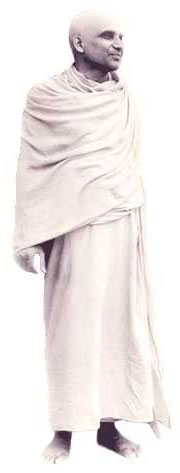
by Swami Krishnananda
The Divine Life Society - Sivananda Ashram, Rishikesh, India
1
1
Chapter 4: THE Nature of Reality (Continued)
Brahman as Consciousness or Intelligence

What is, then, the nature of this Absolute Existence? The inmost being in us, our own existence itself, shall solve the problem. We find that we cannot make a distinction between our being and our consciousness. To think of being as the real, and yet as different from consciousness, seems to be impossible. Just as we cannot deny being, so also we cannot deny consciousness. We can deny the objects and states of consciousness, but we can never deny consciousness itself. In every one of our attempts to do so, it asserts its existence before we even begin to think properly. Consciousness is the most positive of facts, the datum of all experience. It transcends all limits of space, time and causality. Consciousness is never limited, for the very consciousness of the fact of limitation is proof of its transcendental unlimitedness.

This Universal Consciousness is not to be confused with the individual's ego-consciousness. Rather, it is Pure Awareness. Ego-consciousness necessitates a modification in a certain fashion, and hence it is only a mode of becoming and not being in its fullness. Consciousness in the sense of Reality does not imply that outside it something must exist as its object. It is only in empirical cognition that consciousness needs an object. In the highest condition, the existence and the content of consciousness are one and the same. The Absolute knows itself without any process of knowing. Consciousness is absolute Intelligence, unlimited Self-luminosity. Even in all the states of waking, dreaming, deep sleep, swooning, etc., the Self ever remains as the indispensable and indisputable immediacy of Consciousness, a witness of all states. Unaffected and unaltered, it remains in its purity, as the eternal principle in all states of experience. Ultimate Existence is identical with Infinite Consciousness and not individual consciousness. The Real is Impersonal, and the individual is personal.

"Brahman is Consciousness." -Ait Up. III. 3.

"This Purusha is Self-luminous." -Brih. Up. IV. 3. 9, 14.

"The Self alone is its light." -Brih. Up. IV. 3. 6.

"Through what can one be conscious of Him by whom alone one is conscious of this everything? Through what can one know the Knower?" -Brih. Up. II. 4. 14.

Knowledge is not the attribute but the very stuff of Reality. It is the Essence of Existence. Hence, this Reality is unknowable as an object of knowledge. It manifests itself as the first principle in all thought and action. "He who breathes in with your prana, is the Self of yours, which is in all things. He who breathes out with your apana, breathes about with your vyana, breathes up with your udana, is the Self of yours, which is in all things." Yajnavalkya declares with the certainty of a seer of the Truth, "You cannot see the Seer of seeing. You cannot hear the Hearer of hearing. You cannot think the Thinker of thinking. You cannot understand the Understander of understanding. He is your Self, which is in all things." The knowing subject is the essence of the being of the Self, and hence, it is not an object of knowledge. Consciousness cannot be conscious of Consciousness, even as one cannot climb on one's own shoulders. Eternal consciousness is Being itself.

"In truth, O Gargi, this Imperishable One alone sees, but is not seen; hears, but not heard; thinks, but is not thought; understands, but is not understood. There is no other Seer but That, no other Hearer but That, no other Thinker but That, no other Understander but That. In this Imperishable One, O Gargi, space is woven, warp and woof" (Brih. . Up. III. 8. 11). It is further explained that as the ocean is the centre of all waters, the Atman as eye is the centre of all forms, as ear of all sounds, as nose of all smells, etc. The one central operation of this Self-consciousness is manifoldly termed in relation to the cognitive differences as eye, ear, etc. When the eye is directed on space, it is the Consciousness of the Real in the eye that shines, the eye is only a secondary insentient instrument. Similarly, it is so in the case of the other sense-functions. Even thinking and understanding are mere names for the reflection of the Truth-Consciousness in the insentient psychological organs. Speech and mind return baffled, unable to reach it. It is the Atman that shines through the mind and perceives these joys and delights therein. The intensity of the Consciousness is felt in proportion to the reflective capacity of the internal cognitive instruments. All knowledge is a reflection of the Self-existent Reality-Consciousness, a shadow of Brahman-Intelligence. Even a master-genius in all possible branches of learning and arts ever known can have only a semblance of the absolute Wisdom-Mass reflected through his intellect which is only a feeble apology for true knowledge. Even the best inspiration of the greatest poet is only a reflection of Brahman-Knowledge. There is no intelligence, either on earth or in heaven, which can be equal to the Intelligence of the Absolute, because all differentiated beings have only partial intelligence and can never experience Brahman-Consciousness as long as they remain as individuals separated from the Whole. The mind, the intellect and the senses are, therefore, not intelligent; it is Brahman that is Intelligence and Light of lights, jyotisham jyotih.

This knowing Subject is unseizable, indestructible, unattached, unbound, changeless, unaffected. It stands opposed to everything that is objective, as light is set against darkness. It eludes the grasp of him who is engaged in objective consciousness. The whole world is objectively busy, and therefore, Brahman is unknown to the world. We are always conscious of something other than the Self, both in the waking and the dreaming consciousness. It is only in deep sleep that we practically become one with the Absolute. But the presence of ignorance, the store of the potential objective forces existing in an unmanifested state, prevents us from having the experience of Brahman. The unmanifest inert condition is not Reality. Reality is dynamic Consciousness; yet, it is the highest tranquillity. It is the unimaginable fourth state, which includes and transcends the other three states. The Real sees not and knows not anything; It is seeing and knowing itself; "It, the Seer and the Knower, has no interruption of seeing and knowing, because it is Indestructible - there is nothing second to and distinct from it, for it to see and know." "Even as a lump of salt has no distinguishable in or out, and consists through and through entirely of the essence of savour, so in truth this Self has no in and out, and consists through and through entirely of the mass of Consciousness" (Brih. . Up. IV. 5. 13). "As a lump of salt thrown into water would dissolve in the water itself, and there would be nothing of it to be picked up, but wherever one may take it, it tastes salt alone, so indeed is this Great Being, Infinite, Endless, only a mass of Consciousness" (Brih. . Up. II. 4. 12). That is the Ocean of Wisdom and Light in One. "There no sun shines, no moon, no stars, no lightning, no fire; from it, which alone shines, all else borrows light; the whole world is illumined at its splendid shining" (Katha Upanishad V. 15). He who has the Consciousness of this lives in eternal sunshine, it is always day for him. For him the sun does not set. The Atman is compared to a bridge that connects worlds together. "Upon crossing that bridge, if one is blind, he becomes no longer blind; if one is wounded, he becomes no longer wounded; if one is diseased, he becomes no longer diseased. Upon crossing that bridge, even night appears as the bright day, for the State of Brahman is eternally illumined" (Chh. Up. VIII. 4. 2).

In the Maitrayani Upanishad we have the statement that having pierced through darkness, one reaches That which effulges like a wheel of fire, the Brahman which is like the resplendent sun, almighty, That which shines in the sun and the moon, in fire and lightning, and by seeing it, one becomes Immortal (VI. 24). This Real is the absolute knowing Subject, and hence, "It cannot be an object of worship" (Kena Up. I. 4). The internal mechanism of knowledge, together with the senses, is itself an inert object lighted up by the subject which is Brahman-Consciousness. "Everything that this heart and mind are, consciousness, lordship, discrimination, intelligence, wisdom, perception, steadfastness, thought, control over thought, despondency, memory, will, determination, life, desire, attachment - all these are mere appellations of Pure Consciousness. All this is guided by Consciousness, is grounded in Consciousness; the world has Consciousness as its guide. Consciousness is the Basis. Consciousness is Brahman" (Aittareya Upanishad III. 2., 3). "Whoever knows 'I am the Absolute' becomes this All" (Brih. . Up. I. 4. 10). It is the infinitude of the intensest knowledge. It knows itself as Self-Identical. "There is none who knows it. It is the Great Primeval Being" (Svet. Up. III. 19). It is supramental Awareness which constitutes the essence of Existence. It is Consciousness without thought. It is "param vijnanat," "superior to relational knowledge".

The Self is Pure Consciousness, as it is presupposed by all modes of consciousness, which function in the form of consciousness of external conditions or objects. Human consciousness is characterised by objectiveness. It is more a cognition or a perception than simple unadulterated consciousness. The cognitions and perceptions are the processes of knowing through the mind and the senses. In the waking state of ordinary consciousness, the different senses receive different forms of knowledge, and the function and the knowledge of one sense is quite different from and unconnected with that of another. For instance, the eye alone can perceive forms and the ear alone can hear sounds. Knowledges differ with regard to the different senses. But, even if these sense-knowledges are entirely cut off from one another, the person experiencing these sense-knowledges is one and the same. The person is the synthesiser of sense-perceptions which by themselves, do not have relations among themselves. The same person experiences forms, sounds, touches, tastes, smells, etc., and feels: "I am the seer, the hearer," etc., but does not feel that the seer is different from the hearer. The ultimate knower must, therefore, be an absolutely indivisible whole of consciousness. Even if there be the slightest distinction within the constitutive essence of the knower, i.e., if the knower is made up of parts, complete synthesised knowledge would never have been possible. If there is a division within the knower, what is the relation between one part and another therein? If one part is different from the other, what is that which exists between one part and another? The question cannot be answered, as knowledge does not admit of space within itself, as knowledge is presupposed by the idea of space and the notion of time and causality. If the parts which are said to constitute the consciousness or the knower are not differentiated by anything other than the knower, then, the knower does not become a composite of parts, but exists as an undivided consciousness which is absolutely identical with itself. The nature of the knower must be knowledge itself. If not, what is the nature of the knower? The most fundamental experience is consciousness or awareness, pure and simple, free from the self-contradictory divisions and fluctuations of thought. None can experience anything greater than or equal to consciousness as the ultimate basis of all experiences in life.

The knower of sense-perceptions cannot be the mind, too, though the mind is able to know without the help of the senses and is able to coordinate, arrange, and systematically synthesise sense-perceptions. Thoughts differ in different places, times and conditions. Hence, there must be some other synthesising agent of even mental cognitions. Otherwise a person cannot know that he is the same individual experiencing different kinds of thought. Even memory would be impossible but for a non-relative consciousness transcending thoughts. Mental cognitions and sensuous perceptions are heterogeneous in their nature. Therefore the possibility and experience of a unified completeness of self-identical, absolutely immediate and direct consciousness shows that the true Self is Pure Consciousness in its essence, which is not affected by the revolting activities of the mind and the senses. The essential nature of the Knower or the Self must be transcendental consciousness, because, in the state of deep sleep it is seen that when the body, the vital currents, the senses, the mind, the intellect, the ego, the subconscious and everything that goes to make the individual get suspended and denied their validity as existence, the person still exists, as is testified by the following experience which, with great certainty, identifies the person who has woken up with the person who slept previously. The existence of the essential person, the Self, in the condition of deep sleep, was one of awareness of nothing, an awareness together with nothingness, which means mere awareness, as nothingness has no value. Further, the existence of the experience of the Self is corroborated by the subsequent remembrance of the existence of oneself in deep sleep. As remembrance is not possible without previous experience, and as experience is never possible without consciousness, we have to conclude that the Self does exist in deep sleep as mere Consciousness. This Consciousness exists in the waking state as the unchanging basis of the changing mind and the senses. In the dreaming state it exists as the synthesiser of mental functions. The objects in the waking and the dreaming states differ from one another, but the consciousness of objects is one and the same; it does not differ in relation to objects. The only difference between the waking and the dreaming states is that in the former experience is the effect of the function of the mind taking the help of the senses, while in the latter experience is the effect of the function of the mind alone. But, nevertheless, the consciousness is the same, both in the waking and the dreaming states. As this Consciousness is proved to exist in the deep sleep state also, it is evident that this one Consciousness endures without even the least change in itself in all states of experience, without a past or a future for its existence. It does not differ from another consciousness, nor does it differ from itself now and then, here and there, in this or that state, as objects and mental states do. Consciousness is always one and is ever secondless. We cannot conceive of two consciousnesses, though mental states may be two or more. Consciousness is, therefore, eternal. Metaphysically, anything that is eternal must be infinite, without restrictions. Since limitation, too, is what is known by the Consciousness, Consciousness transcends limitation. The Self is Absolute Consciousness, Brahman or the Bhuma. The ignorance that is generally experienced in deep sleep cannot be a real existence, for, if it did really exist, it would be an eternal antagonist of consciousness, and consciousness would thereby be limited and become perishable. The illogicality and the impossibility of the existence of ignorance cancels its value and establishes the existence of the Absolute as Consciousness alone, which is not a bare, featureless transparency, but comprehensive of the whole universe of objects. Everyone experiences consciousness and not ignorance as his basic being or Self. The Self is therefore different from ignorance in the sense that consciousness is not ignorance, but it does not mean that the Self is a witness of an objective ignorance, which, too, is existence.

The Self neither dies, nor is born, nor has it any modification. If it has these changes, they have to be experienced by some other consciousness, which argument would lead to an infinite regress. The ultimate experiencing Consciousness is the Self. This Absolute Self is self-luminosity, non-duality, independence, Consciousness, the sole Being.

  1
 
  Catalogue Search Site Map Contact
  Design by Savitr as a Love Offering